A quiet revolution is reshaping the global animation landscape, and its epicentre is Australia. Long celebrated for its visual effects prowess, the nation is now stepping into the spotlight as a creator of original animated intellectual property that commands audiences across continents. This shift from service work to content ownership is not accidental; it is the result of deliberate policy, technological agility, and a deep well of narrative distinctiveness.
How Australian Studios Shifted to Original IP
For decades, Australian animation houses were the invisible engine behind major international features, handling complex CG sequences and character animation for U.S. studios. The turning point arrived when streamers, desperate for volume and differentiation, started commissioning directly from non-Hollywood creators. Australian producers seized the moment, packaging series that foregrounded local humour, ecological themes, and warm, relatable family dynamics. The financial outcome has been striking. According to the latest production data from Screen Australia’s active tracking, the 2023–24 fiscal year saw animation production spending cross the AUD 140 million threshold, heavily supported by international financing. The share of expenditure attributable to original Australian concepts has climbed notably, reflecting a maturing ecosystem where creators retain rights. [Screen Australia Active Production – Animation]
Policy Levers That Attract Global Productions
Australia’s attractiveness as an animation hub is deliberately engineered. The federal government’s 40% Producer Offset for television animation effectively underwrites a significant chunk of production budgets, making the cost of hiring world-class Australian crews competitive with other jurisdictions. State agencies add layered incentives: for example, a studio setting up in Victoria can tap the Victorian Screen Incentive, which offers additional rebates on qualifying expenditure. These stacked benefits are complemented by a robust co-production treaty network. When an Australian company partners with a Canadian studio under the bilateral treaty, both can access domestic tax benefits and national content quotas, creating a financial architecture that transforms ambitious ideas into fully funded realities.
Cultural Authenticity as a Market Advantage
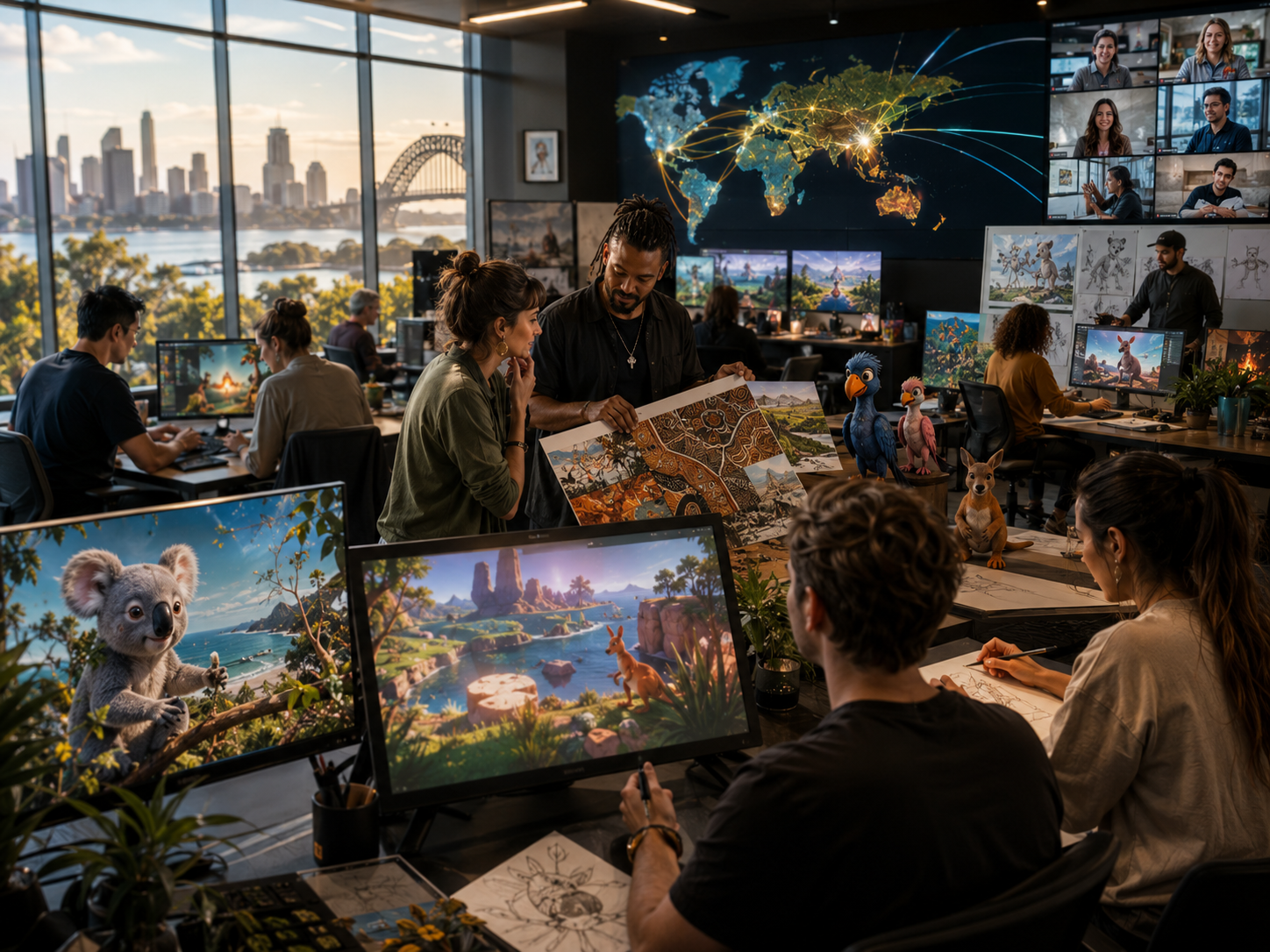
In an entertainment environment saturated with homogeneous content, Australian animation offers a point of difference. Creators are mining the country’s singular wildlife, vast outback landscapes, and Indigenous knowledge systems to build story worlds that feel fresh. Animated projects co-designed with Aboriginal and Torres Strait Islander communities are moving through development pipelines, delivering spiritual depth and visual language unavailable elsewhere. This cultural capital converts directly into market value: international buyers actively seek inclusive content that satisfies audience demand for authenticity. A series rooted in a specific place, when executed with universal emotional beats, can outperform generic high-concept shows, and Australian producers are proving this thesis season after season.
Technological Evolution and Workforce Development
The infrastructure supporting this boom is state-of-the-art. Australian studios have embraced real-time rendering pipelines, motion-capture stages equipped for animated series, and cloud-based collaboration tools that allow seamless co-direction between Melbourne and Los Angeles. This technological readiness stems from the country’s VFX legacy, which built a deep talent pool of animators, riggers, and compositors accustomed to blockbuster deadlines. Education providers now partner directly with production companies to co-design micro-credentials in Unreal Engine animation, ensuring graduates are production-ready from day one. The adoption of AI-assisted digital ink-and-paint systems is also enabling boutique studios to scale up their 2D output without ballooning headcount, a crucial factor when competing for global tenders.
International Sales Strategies and Platform Partnerships
Distribution has been radically democratised. Instead of relying on a few broadcasters, Australian animation companies now attend MIPCOM and Kidscreen with slates ready for multiple platforms. The strategic pivot toward co-commissioning with European public service broadcasters like the BBC and France Télévisions has unlocked production funds while guaranteeing editorial independence. Simultaneously, the proximity to Asia is being leveraged for co-development of anime-style projects, targeting both Western and Eastern demographics through hybrid aesthetics. This dual-hemisphere strategy, underpinned by a weak Australian dollar that makes production costs attractive to overseas buyers, positions the country as a versatile production partner capable of delivering everything from preschool comedy to adult animated drama.