The Discovery versus Conversion Paradox
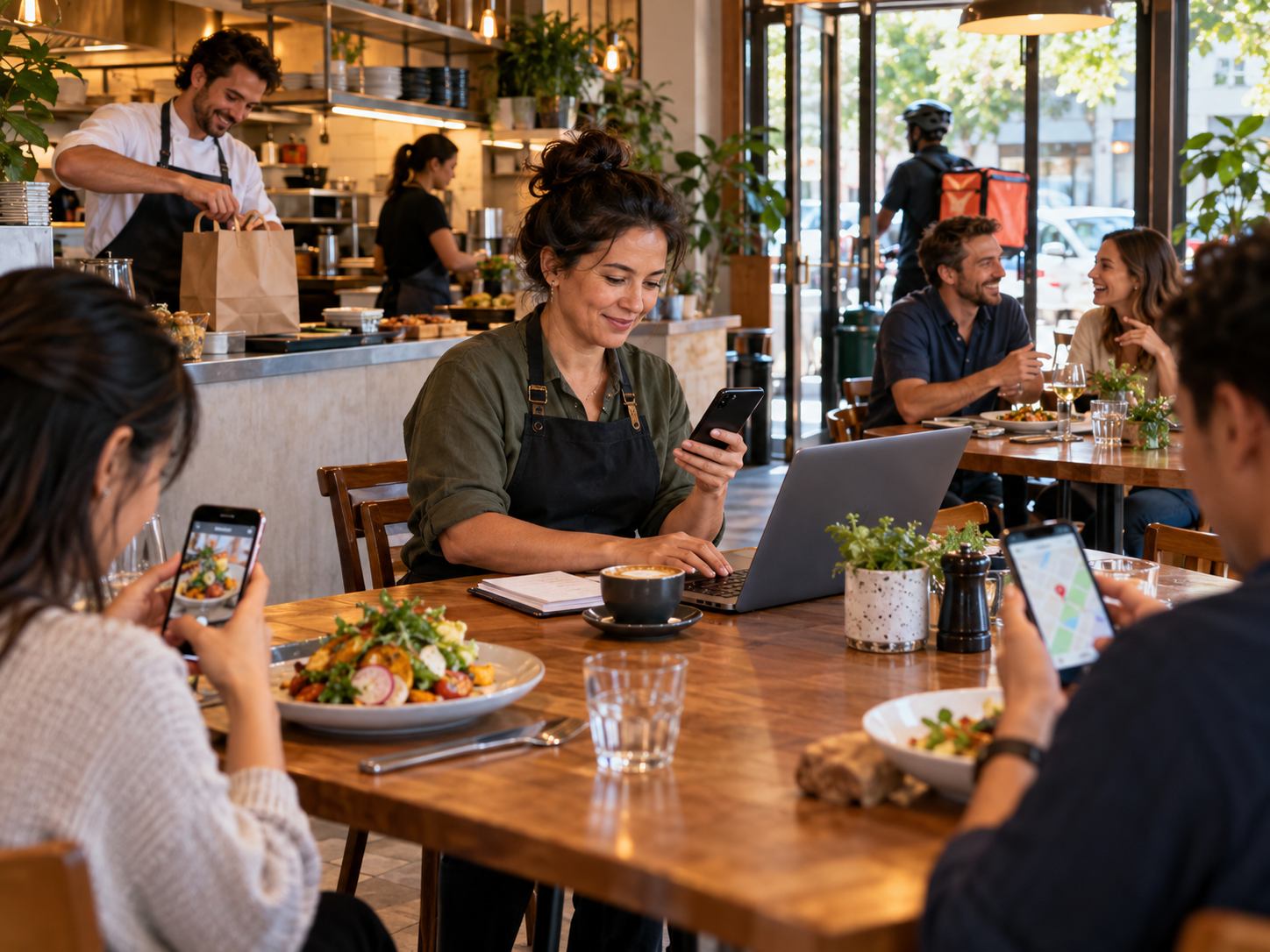
Digital marketing for small Australian restaurants has become a complex battlefield. Operators now prioritize Instagram and Google equally as main promotional channels, each cited by 48 percent of respondents, followed by influencers (34 percent) and TikTok (28 percent). Yet a fundamental gap remains: 55 percent of customers find restaurants through word of mouth, while Google search and reviews account for only 35 percent.
Google Business Profile as the Strongest Free Asset
Data from the Lightspeed 2026 State of Hospitality Report reveals that although operators invest more in digital visibility, customer decisions remain rooted in trust. Social media acts as an awareness driver, not a direct conversion tool. This means small restaurants must optimize two things at once: a strong digital presence and a customer experience that drives organic recommendations.
For Australian restaurants, Google Business Profile (GBP) is the most powerful free marketing tool. About 70 percent of consumers use Google products when searching for local businesses, and 15 percent search directly on Google Maps. A complete GBP optimization—current photos, accurate information, active review responses—can significantly improve local discovery.
Instagram and Short-Form Content
Restaurants winning on Instagram in 2026 are those combining consistent reels, behind-the-scenes content, user-generated content, and chef-led storytelling with a planned rhythm. El Jannah, the Lebanese-Australian charcoal chicken chain, recently appointed a social agency to manage their organic channels on TikTok, Instagram, Facebook, and YouTube, focusing on always-on content and reactive social moments.
Hybrid Strategy: Use Apps to Be Found, Move Customers to Your Own Channel
The biggest challenge for small restaurants is delivery platform commissions reaching 30 percent. Uber Eats charges 30 percent for marketplace delivery, while DoorDash also charges 30 percent for marketplace delivery. The recommended strategy is hybrid: use apps to be discovered, then move regular customers to your own ordering channel, which only incurs card processing fees of around 1.75 percent.
Measurable SMS and Email Marketing
One Sydney restaurant group generated a 33x ROI from an SMS-based feedback survey campaign. A campaign worth about $410 returned around $13,600 in revenue, while 30 percent of customers who left a review returned weekly, and 60–70 percent returned at least once a month.
Bridging the Discovery-Conversion Gap
Small restaurants that succeed in 2026 understand that digital marketing is not about being on every platform, but about ensuring every channel works toward one goal: turning searches into visits, and visits into loyalty. As Laura Box from Hospitality Magazine says: “We see customers still spending money, but they are more conservative about how they do it.”