A New Generation of Culinary Leaders
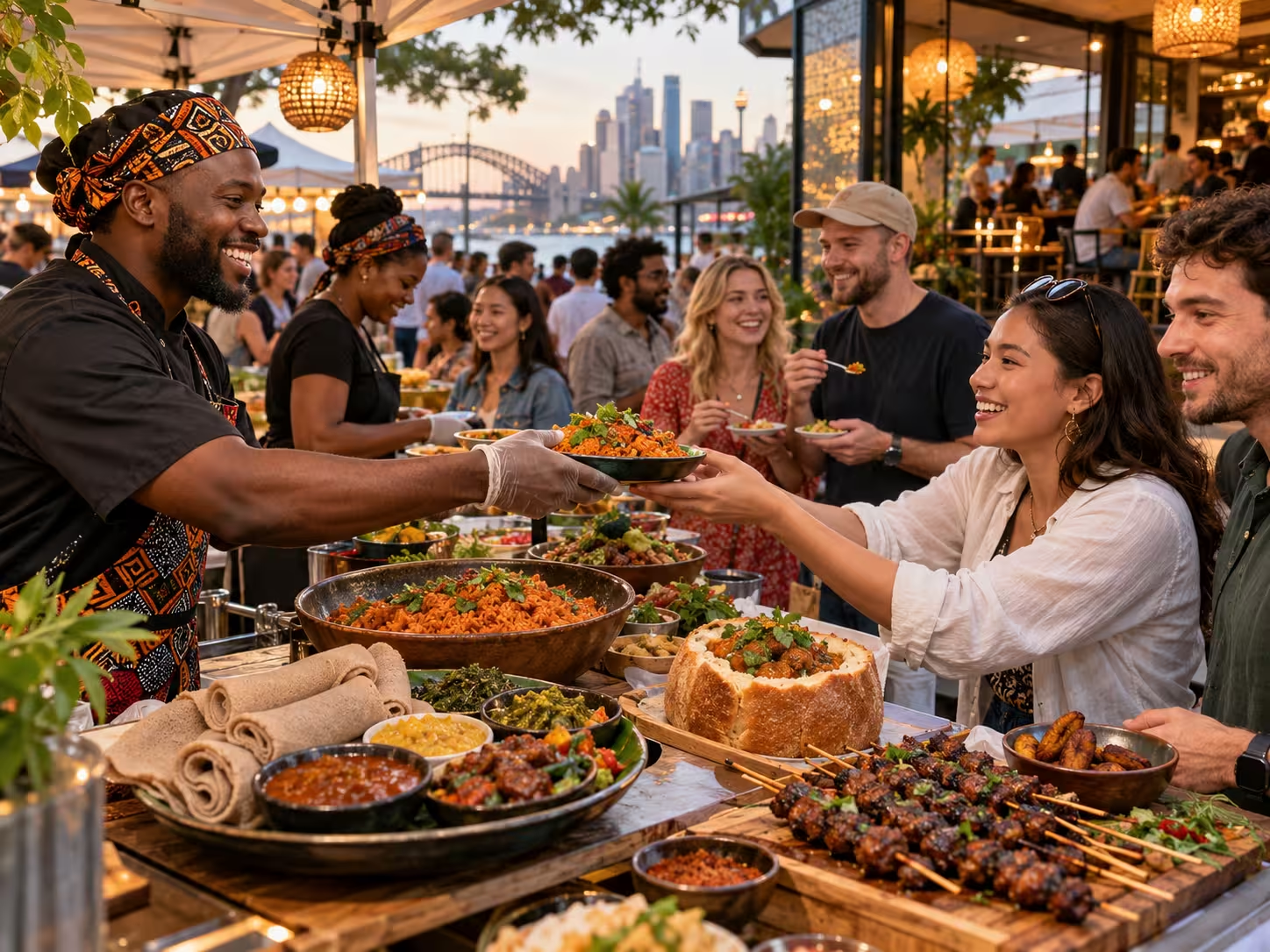
A decade ago, African food in Australia was largely invisible in fine dining. Today, chefs from Nigerian, Ethiopian, Eritrean, Ghanaian, and South African backgrounds are headlining tasting menus, collaborating with wineries, and appearing on national food television. These chefs are not simply replicating traditional recipes. They are reinterpreting them through modern plating, fermentation, and locally sourced produce. This shift marks a cultural coming-of-age for African-Australian communities. It also reflects a broader change in Australian dining, where diners reward authenticity, story, and technique. According to SBS Food’s ongoing coverage of multicultural cuisine, African recipes have become one of the fastest-growing search categories on Australian food platforms. SBS Food
From Family Recipes to Tasting Menus
Many of these chefs learned to cook at home, not in culinary school. Their mothers and grandmothers taught them how to balance heat, acid, and umami. Later, they trained in Australian kitchens, absorbing French, Japanese, and Southeast Asian techniques. The result is a hybrid style that feels both rooted and contemporary. A Nigerian chef might serve suya-spiced kangaroo with pickled onions. An Ethiopian chef might pair injera with cured ocean trout and native bush tomatoes. These dishes are not fusion for its own sake. They are personal narratives about migration, memory, and adaptation. Diners respond because the food is delicious, but also because it carries meaning.
Breaking Down Cultural Barriers
Fine dining has historically been Eurocentric in Australia. African chefs faced assumptions that their food was “street food” or “too spicy” for mainstream palates. Diaspora chefs have challenged these stereotypes by controlling their own narratives. They host masterclasses, write cookbooks, and appear on panels. They also collaborate with non-African chefs, creating pop-up dinners that introduce new audiences to African ingredients. Social media has been a powerful tool. A single TikTok video of jollof rice being prepared can reach hundreds of thousands of viewers. This visibility has led to invitations from food festivals, luxury hotels, and corporate events. The result is a gradual shift in what Australian fine dining looks like and who gets to define it.
The Economics of Elevation
Moving into fine dining is not just a creative choice; it is an economic strategy. Tasting menus and set-price dinners offer higher margins than casual takeaway. They also attract press coverage and corporate bookings. However, fine dining requires significant investment in staff, tableware, and interior design. Many African chefs fund this transition through a mix of pop-up profits, private catering, and community investment. Some partner with established restaurateurs to share risk. Others start as a wine-bar snack menu before expanding into a full restaurant. Industry data from IBISWorld shows that the Australian café, restaurant, and takeaway sector continues to evolve, with niche cuisines gaining market share. IBISWorld
Challenges of Authenticity and Adaptation
Chefs walk a fine line between authenticity and accessibility. If a dish is too traditional, some diners may not understand it. If it is too adapted, the diaspora community may feel alienated. Successful chefs solve this by offering clear descriptions, optional spice levels, and storytelling. They also train front-of-house staff to explain ingredients and origins. This educational approach builds trust. It also turns a meal into a cultural exchange. For many chefs, the goal is not to dilute African cuisine but to expand its vocabulary. They want diners to leave knowing the difference between Nigerian egusi and Ghanaian groundnut soup.
A Permanent Shift in Australian Taste
The presence of African chefs in fine dining is no longer a novelty. It is a structural change. As more African-Australian children grow up in food-loving households and pursue hospitality careers, the pipeline of talent will deepen. Investors are noticing. Food critics are paying attention. And diners are booking tables weeks in advance. This momentum suggests that African flavors will continue to move from the margins to the mainstream of Australian gastronomy.