A Continent Built for Darkness
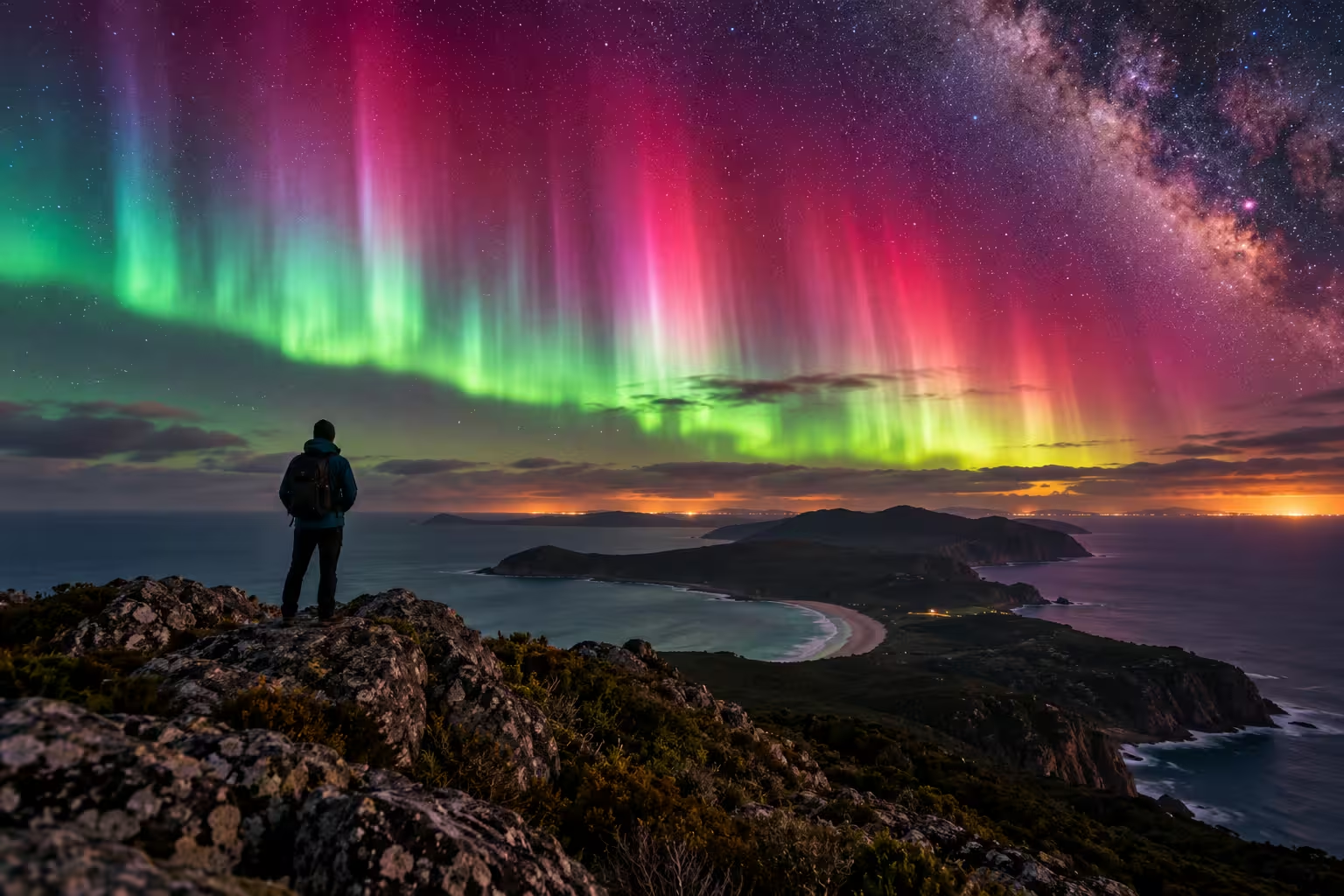
Australia’s geographic isolation and sparse interior population have created conditions that most of the developed world has long since lost: genuinely dark skies. More than 80% of the global population now lives under light-polluted skies, and a third of humanity can no longer see the Milky Way at all. Australia, by contrast, retains vast tracts of land where the night sky remains essentially untouched.
This natural advantage has translated into a formal network of protected dark sky places, each certified by the International Dark-Sky Association (IDA) based on stringent criteria involving lighting policy, sky quality measurement, and community commitment.
The Pioneers: Warrumbungle and the River Murray
Warrumbungle National Park, located near Coonabarabran in New South Wales, holds the distinction of being the Southern Hemisphere’s first certified Dark Sky Park. Its high altitude, low humidity, and distance from major urban centres create ideal viewing conditions. The park is also home to Siding Spring Observatory, one of Australia’s premier astronomical research facilities.
South Australia’s River Murray International Dark Sky Reserve represents a different model. Spanning more than 3,200 square kilometres with Swan Reach Conservation Park at its heart, this reserve demonstrates how dark sky protection can coexist with agricultural and river-based communities. Roughly 90 minutes from Adelaide, it offers accessible dark sky experiences for urban populations.
The Newest Additions
In 2026, Australia’s dark sky network expanded significantly. Karlu Karlu (Devils Marbles) Conservation Reserve in the Northern Territory became the country’s third designated International Dark Sky Sanctuary. The 1,800-hectare reserve, famous for its striking granite boulders, holds profound cultural significance for the Kaytetye, Warumungu, Warlpiri, and Alyawarra Traditional Owners. The designation includes provisions for Aboriginal-led night sky storytelling, blending astronomical interpretation with cultural knowledge.
Queensland has also emerged as a significant player. A 2026 ranking identified Undara Volcanic National Park as the state’s top stargazing destination, achieving a perfect Bortle Scale rating of 1 — the darkest possible sky conditions. Located in the Gulf Savannah region, the park combines ancient volcanic geology with exceptionally clear skies.
The Community Dimension
Dark sky certification is not merely about protecting views. Winton, Queensland, became Australia’s second Dark Sky Community in March 2026, joining a global network of just 64 such designated towns. This status recognizes communities that actively manage outdoor lighting to preserve night sky quality while maintaining safety and functionality.
The emergence of grassroots movements — such as efforts to designate the Hay Plains in New South Wales — suggests that dark sky tourism is evolving from a niche interest into a mainstream regional development strategy. Google Trends data shows search interest in “dark sky” has roughly doubled across NSW since 2022, with regular peaks reaching the 90s by 2026.
Planning Your Visit
Each dark sky destination offers distinct experiences. The River Murray reserve provides accessible riverboat star cruises and guided constellation walks. Warrumbungle offers observatory access. Karlu Karlu delivers a combination of geological wonder and cultural immersion. What unites them is a shared commitment to preserving one of humanity’s oldest and most profound experiences: standing beneath a truly dark sky.