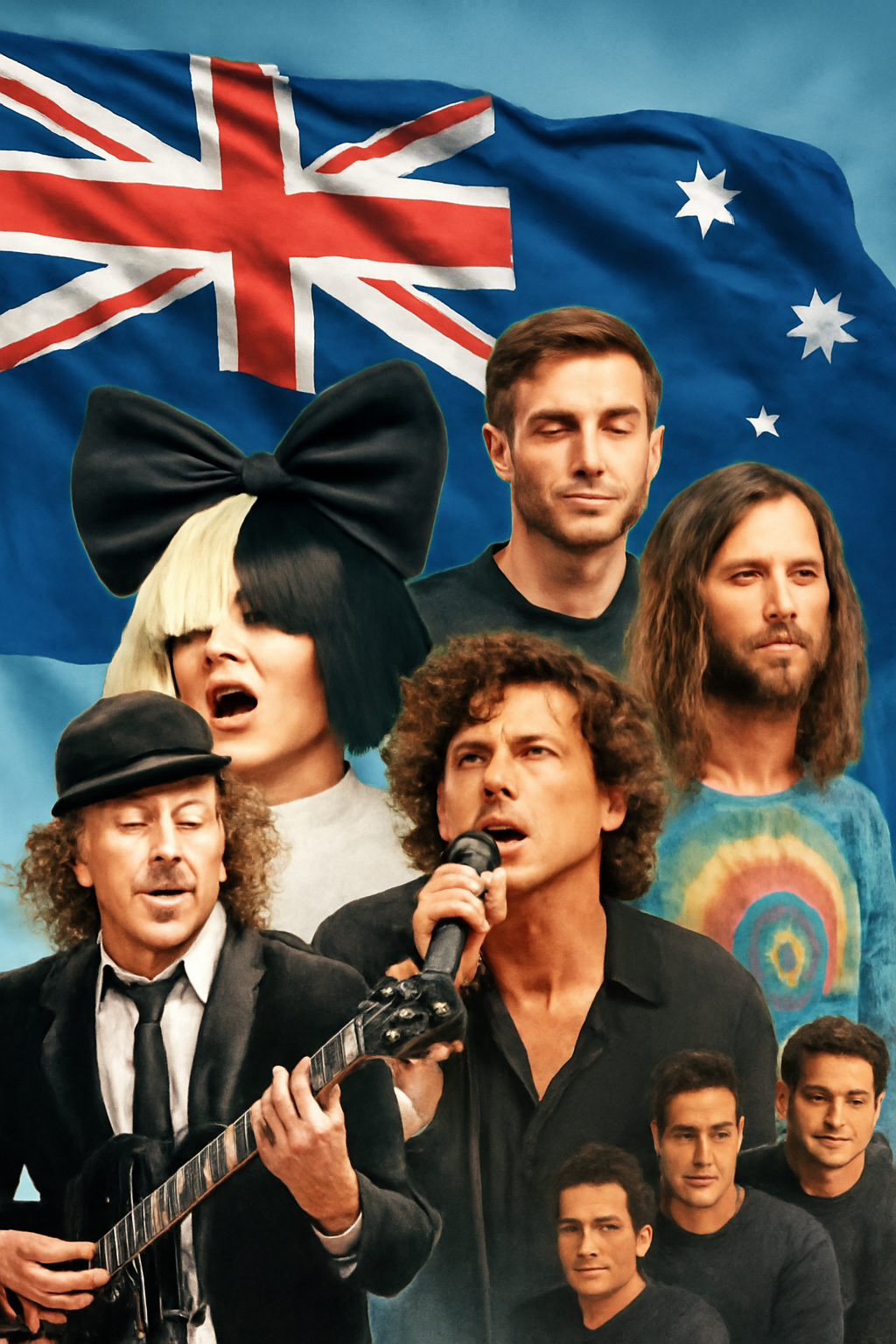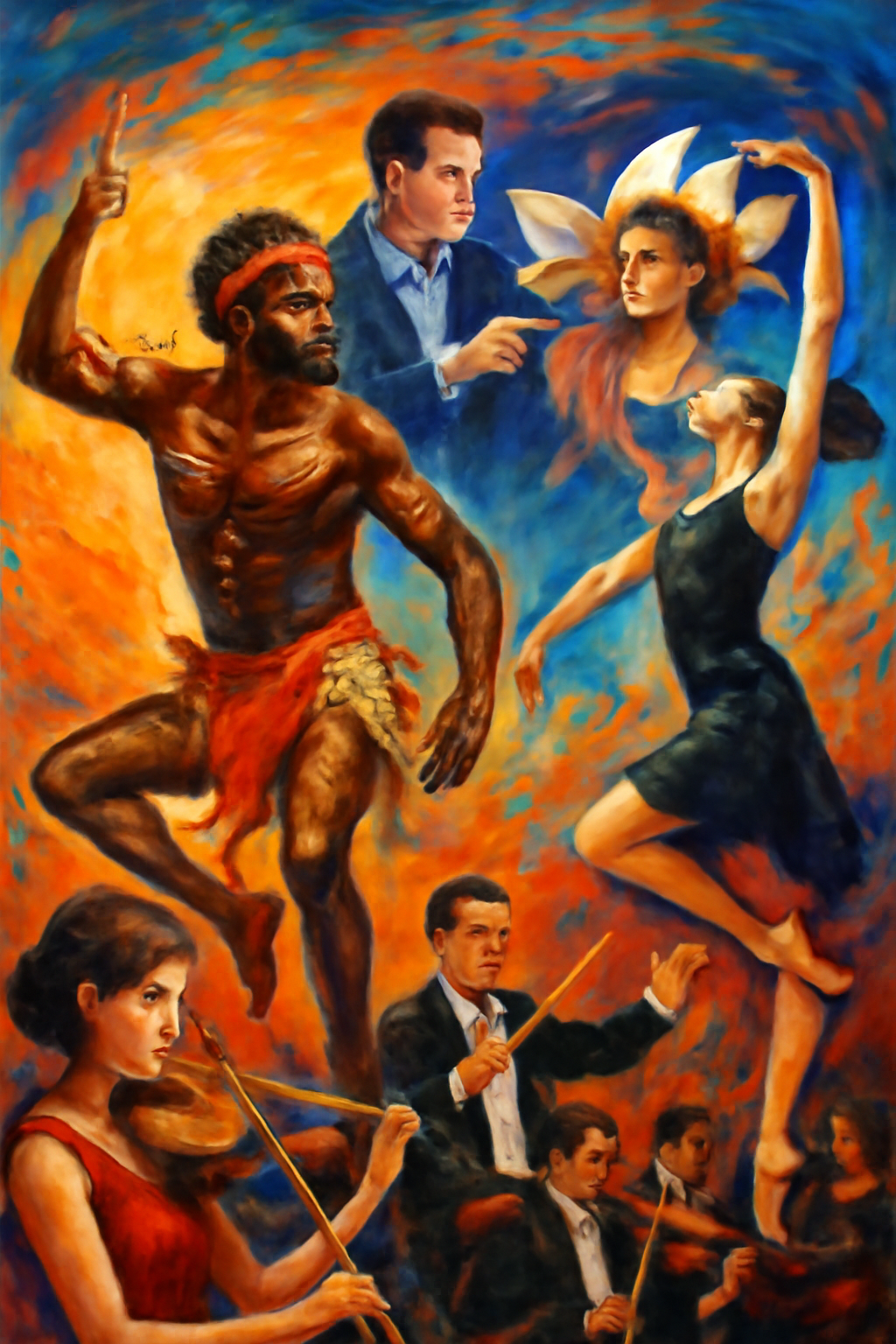
The performing arts in Australia reflect a rich and diverse culture shaped by its history, geography, and multicultural population. From the ancient traditions of Indigenous dance to the avant-garde performances found in the country’s experimental theatre scene, Australia’s performing arts offer a unique and evolving lens through which to explore its people and stories. Whether it’s the precision of ballet, the intimacy of theatre, or the unpredictability of performance art, Australia offers a vibrant and multifaceted arts scene.
Indigenous Dance: A Connection to Culture and Land
At the heart of Australian dance is the rich tradition of Indigenous performance. The Indigenous peoples of Australia have long used dance as a way of telling stories, honoring the land, and connecting with the spiritual world. Traditional dances, performed at ceremonies and festivals, are more than just an artistic expression; they are a living, breathing manifestation of cultural history, passed down through generations.
These dances often incorporate intricate body movements, rhythmic patterns, and symbolic gestures that communicate ancestral stories or reflect the relationship between humans and nature. The continued practice of Indigenous dance, particularly by artists such as the Bangarra Dance Theatre, serves as a vital link to Australia’s past while simultaneously embracing modern artistic techniques. The fusion of traditional Indigenous dance with contemporary dance styles reflects a broader trend in Australia’s performing arts, where cultural heritage and modernity coexist.
Theatre in Australia: From the Colonies to Contemporary Stages
Theatre in Australia has evolved dramatically since its colonial beginnings. Early Australian theatre was primarily focused on British-style plays, but over time, the country developed its own distinct voice. Australian playwrights, such as Patrick White and David Williamson, began to examine the country’s national identity, tackling social and political issues through their works. This trend continues today, with playwrights using the stage to explore Australia’s complex societal landscape.
Contemporary Australian theatre often challenges traditional norms, using diverse narratives and innovative techniques. Works by playwrights like Andrew Bovell and Joanna Murray-Smith highlight the evolving nature of Australian storytelling, exploring the intricacies of human relationships and national identity in a modern context.
Pushing the Envelope: Experimental Theatre
Experimental theatre in Australia is a space where artists have the freedom to push boundaries, both creatively and conceptually. Unlike traditional theatre, which often follows a linear narrative, experimental theatre embraces ambiguity and abstraction. These performances can involve unconventional stage designs, multimedia elements, and audience interaction, creating a more immersive and dynamic theatrical experience.
One prominent example of experimental theatre in Australia is the performance collective “Back to Back Theatre.” This company is known for its innovative approach to storytelling, often integrating social issues with performance to create thought-provoking, sometimes challenging, works that encourage reflection on the human condition. Their productions explore complex themes such as disability, social inequality, and mental health, challenging audiences to rethink societal norms and biases.
The Importance of Festivals in Australian Performing Arts
Festivals play a pivotal role in the development and dissemination of performing arts in Australia. Events like the Sydney Festival, the Melbourne International Arts Festival, and the Adelaide Fringe Festival offer a platform for both emerging and established artists to showcase their work. These festivals celebrate the richness of Australian theatre and dance, while also attracting international talent and audiences, thereby fostering a global exchange of ideas and artistic practices.
For performers, these festivals are an invaluable opportunity to take creative risks and present experimental works that might not otherwise be seen in traditional venues. The inclusivity of these events means that artists can present pieces that challenge audiences’ expectations and break down the barriers between performer and spectator.
Global Recognition of Australian Performing Arts
Australia’s performing arts scene has garnered increasing international attention, with productions and performers touring globally and receiving accolades for their creativity and innovation. Australia’s ability to balance its rich Indigenous traditions with modern performance practices has contributed to the global appeal of its arts scene. As a result, Australian theatre and dance have found a strong presence in international festivals and competitions, further cementing the country’s place as a hub for contemporary arts.
Through its blend of tradition and innovation, Australia continues to shape and redefine the performing arts, creating a dynamic and inclusive space for artists to explore new forms of expression and connection.