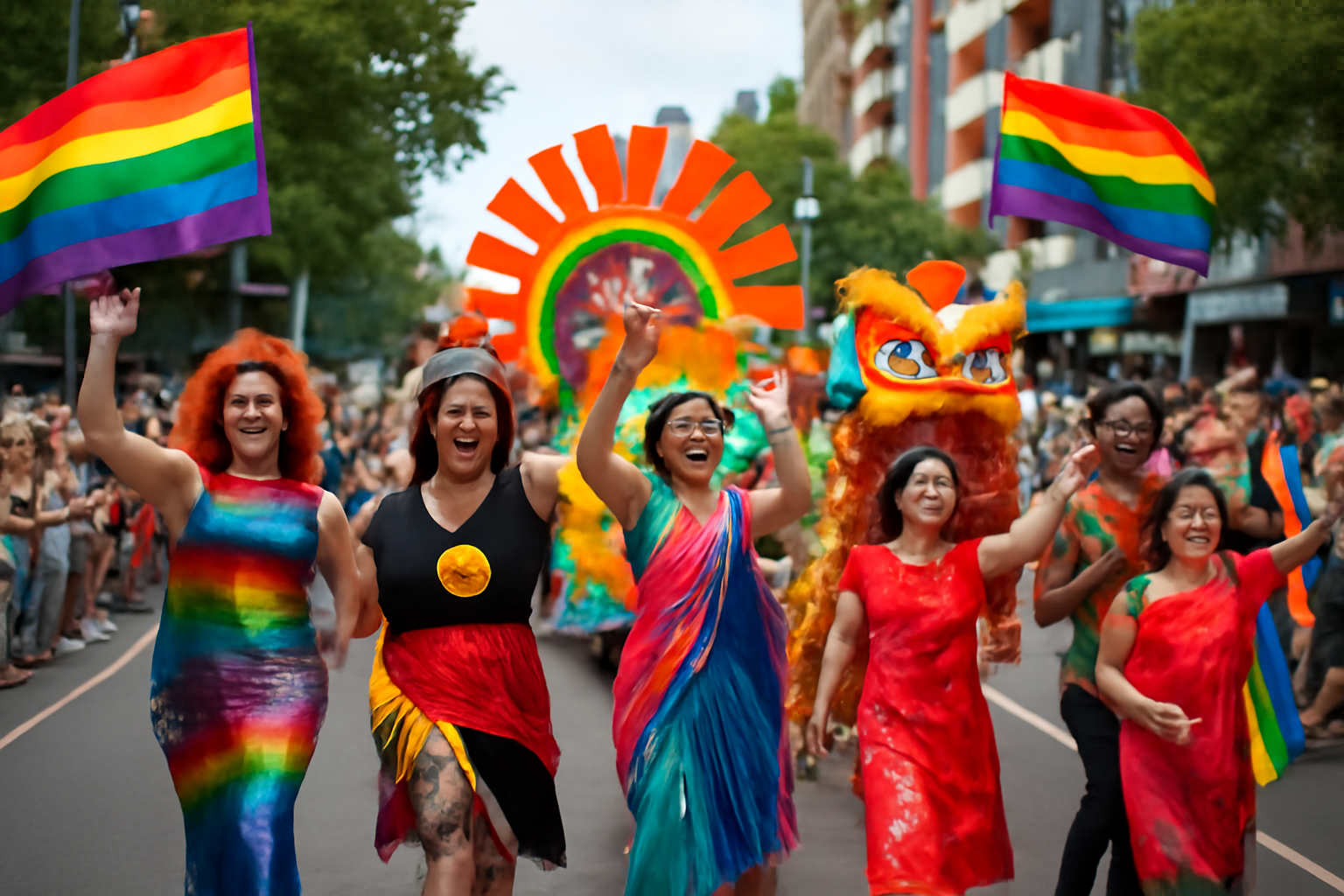
Australia, a nation of immigrants, celebrates its diverse cultural landscape through a multitude of parades and festivals held year-round. These events are a powerful reminder of the importance of cultural exchange, unity, and mutual respect. Whether it’s the grand Sydney Gay and Lesbian Mardi Gras or the annual Moomba Festival in Melbourne, parades in Australia highlight the nation’s commitment to celebrating and embracing different cultures.
The Sydney Mardi Gras is one of the most well-known and significant parades in Australia, attracting participants and spectators from around the world. It began as a protest for LGBTQIA+ rights, and over the years, it has transformed into a massive celebration of love, acceptance, and equality. The parade features extravagant costumes, music, and colorful floats that express the diversity and creativity of the LGBTQIA+ community. The Mardi Gras is a key event in the cultural calendar of Australia, symbolizing the country’s commitment to human rights and inclusion.
Similarly, the Melbourne Moomba Festival stands out as an iconic event that brings together people from all walks of life to celebrate the essence of Australian culture. The Moomba Parade, with its stunning floats and water-based events, draws thousands of participants each year. The festival encourages local and international artists to showcase their talents, while the parade highlights the importance of community engagement and family-oriented fun. Moomba is a perfect representation of Australian multiculturalism, with various communities coming together to celebrate the start of spring in a truly festive atmosphere.
In cities like Sydney and Melbourne, the Chinese New Year parade is another example of how cultural diversity is celebrated. During this time, the streets are adorned with red lanterns, and dragon dances and lion dances are performed in grand processions. These celebrations are a way for the Chinese-Australian community to share their traditions with the wider public, while also marking the significance of the lunar calendar in the Asian culture. The Chinese New Year parade fosters a sense of pride in Chinese heritage and invites Australians from all backgrounds to engage in cross-cultural dialogue.
Equally important are the parades and festivals that celebrate Australia’s Indigenous heritage. The Koorie Heritage Trust in Melbourne organizes events that honor Aboriginal and Torres Strait Islander cultures. These parades highlight Indigenous music, dance, art, and storytelling, helping to preserve traditional practices while also educating the broader public about the significance of Indigenous cultures to Australian society. These parades are a vital part of Australia’s efforts to reconcile its colonial past and build a more inclusive future.
In addition to these major events, smaller, local festivals, like the Festival of the Winds in Sydney, further enrich Australia’s cultural landscape. The parade features elaborate kite flying displays and attracts thousands of visitors every year. It celebrates the arrival of spring and brings the community together to appreciate the arts, creativity, and diversity. The colorful kites soaring in the sky represent the power of imagination, as well as the interconnectedness of all cultures.
These parades and festivals are more than just entertainment; they serve as powerful tools for social change. By celebrating cultural diversity in such a visible and inclusive way, these events help foster a deeper sense of belonging for people from all ethnic backgrounds. In a country as diverse as Australia, parades act as a unifying force, helping to bridge cultural divides while promoting respect, understanding, and pride.