Backpacking in Australia is often perceived as expensive, but in reality, the cost depends heavily on how you plan your trip. Many travelers overspend not because Australia is inherently unaffordable, but because they underestimate distances, choose inefficient routes, and fail to balance their daily expenses.
This guide focuses on a realistic approach to traveling Australia on a budget without missing out on the core experiences—coastal walks, city life, nature, and local culture.
Before traveling, always refer to official visa information at https://immi.homeaffairs.gov.au/ and destination guidance at https://www.australia.com/.
Understanding Australia’s travel structure before planning anything
The first thing to understand is that Australia is not a compact travel destination. Unlike Europe or Southeast Asia, cities are extremely far apart, and moving between them often takes hours or even a full day.
Because of this, successful budget travel in Australia is not about how many cities you can tick off, but how well you choose your region.
For first-time backpackers, it is best to stick to one main travel corridor:
- East Coast route (Sydney – Brisbane – Cairns)
- Southern route (Sydney – Melbourne)
These routes offer a balanced mix of beaches, urban life, and nature while keeping transport costs manageable.
The more frequently you move between regions, the more your budget will increase due to transportation, accommodation changes, and time loss.
Managing your biggest expenses: accommodation, food, and transport
In Australia, three categories dominate your travel budget: where you sleep, what you eat, and how you move between cities.
Hostels are the most practical option for backpackers. Beyond price, they provide shared kitchens, laundry facilities, and social spaces that can significantly reduce daily expenses. A well-located hostel near supermarkets and public transport can actually save more money than a cheaper option far from everything.
Food spending is another major factor. The most effective strategy is combining cooking and occasional dining out. Supermarkets like Coles, Woolworths, and Aldi offer affordable basics such as pasta, rice, eggs, bread, and vegetables. Cooking even two meals per day can drastically reduce your expenses.
Transport within cities is relatively efficient. Sydney, Melbourne, Brisbane, Perth, and Adelaide all have public transport systems that are easy to navigate after a short adjustment period. Avoid relying on taxis or rideshares for daily movement unless necessary.
For intercity travel, compare buses, trains, and flights carefully. Flights may appear cheap at first but often exclude baggage and airport transfers. Overnight buses can save accommodation costs but require physical endurance. Always calculate total travel cost, not just ticket price.
Free experiences that often become the highlight of the trip
One of Australia’s biggest advantages for backpackers is that many of its best experiences are free or low-cost.
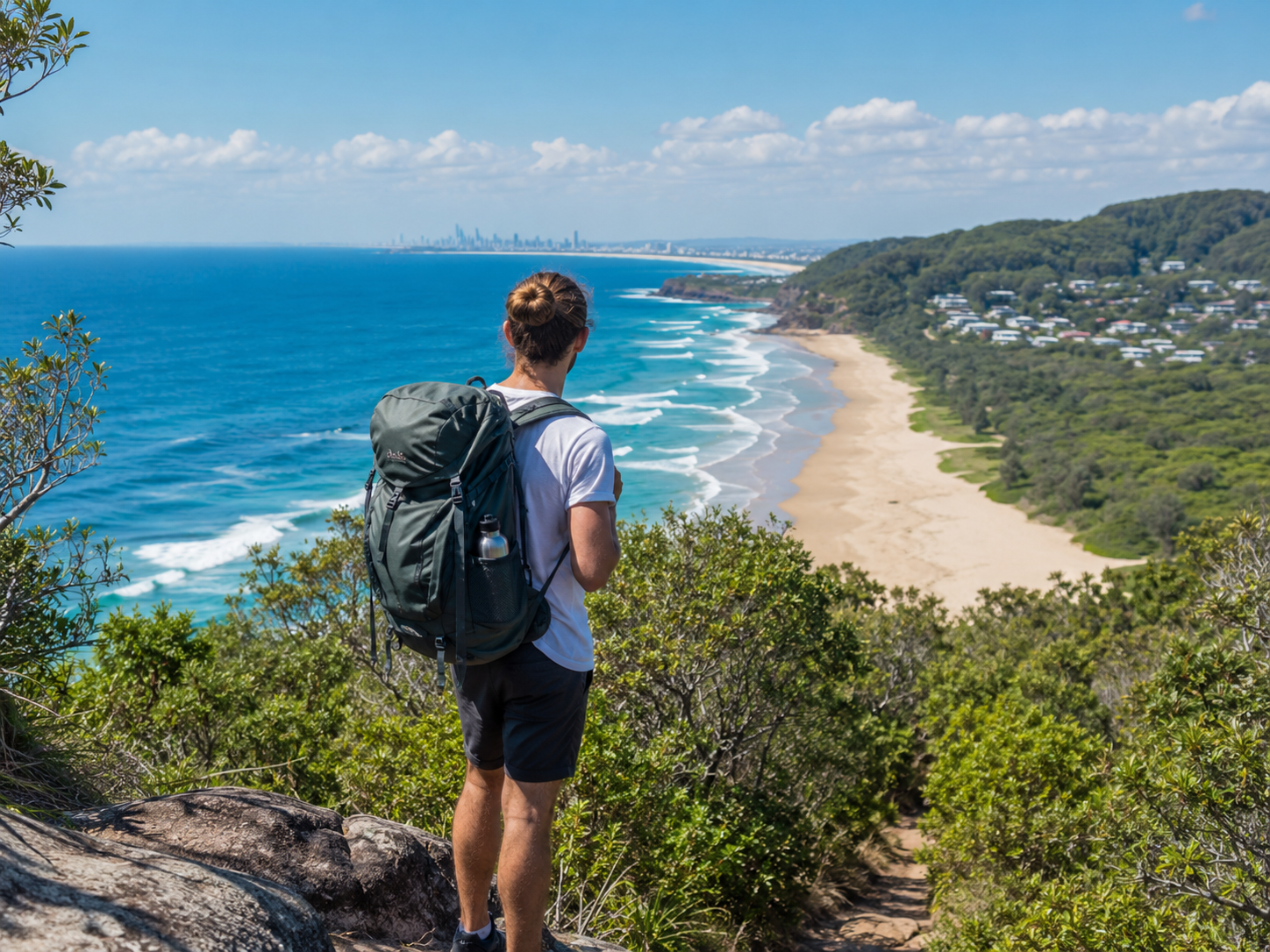
In Sydney, the Bondi to Coogee coastal walk is one of the most rewarding activities and costs nothing. The Royal Botanic Garden, Circular Quay, and The Rocks area also offer scenic and cultural value without entrance fees. Public ferries can also be an affordable way to see the harbour.
In Melbourne, the city itself becomes the attraction. Laneways filled with street art, public parks, free galleries, and neighborhoods like Fitzroy and Carlton offer deep cultural experiences without spending much.
Nature experiences are widely accessible. National parks, beaches, and coastal viewpoints are often free or require minimal fees depending on the region. Always check official park information at https://www.dcceew.gov.au/ before visiting.
Wildlife encounters can happen naturally, but they should not be expected as guaranteed experiences. Seeing kangaroos, parrots, or possums is possible in certain areas, but depends on timing and location.
A smart budgeting rule is simple: pay only for experiences you cannot replicate elsewhere, such as reef tours, surf lessons, or cultural guided experiences.
A simple 10-day travel structure that works
A realistic first-time itinerary usually focuses on Sydney and Melbourne.
Start in Sydney for 4–5 days. Explore Circular Quay, the Opera House surroundings, The Rocks, and the Royal Botanic Garden. Spend one full day on the Bondi to Coogee coastal walk. If time allows, add a day trip to the Blue Mountains.
Then move to Melbourne for another 4–5 days. Explore the CBD, laneways, street art areas, Fitzroy, and local markets. A beach visit to St Kilda adds variety. If your budget allows, a Great Ocean Road tour can be a highlight.
Avoid overloading your schedule. In Australia, travel time often consumes more energy than activities themselves.
Common mistakes that increase travel costs
The most common mistake is trying to cover too many cities in a short period. This increases transport costs and reduces travel quality.
Another issue is booking transport without checking hidden costs like baggage fees or airport transfers. A cheap flight is not always a cheap journey.
Food spending also adds up quickly when travelers rely heavily on cafes, snacks, and takeaway meals instead of cooking.
Finally, traveling during peak seasons without booking ahead can significantly increase accommodation prices and reduce availability.
Practical tips for smoother travel
Packing light is essential. Laundry services are available in almost all hostels, so there is no need to carry excessive clothing.
Choose accommodation with kitchen access to reduce food costs and increase flexibility.
Walk whenever possible. Many Australian cities are highly walkable, and walking often leads to unexpected discoveries.
Always check official sources for visa rules and travel updates instead of relying only on blogs or social media.
FAQ
Is Australia expensive for backpackers?
It can be, but costs can be controlled through slow travel, shared accommodation, and self-catering.
What is the cheapest way to travel in Australia?
Within cities, public transport is best. Between cities, buses or budget flights depending on distance.
Do I need a car in Australia?
Not for major cities or common backpacker routes.
How long should a first trip be?
Around 10–14 days is ideal for a focused itinerary.
What should I prepare before arriving?
Accommodation for the first few nights, visa approval, and basic travel insurance.