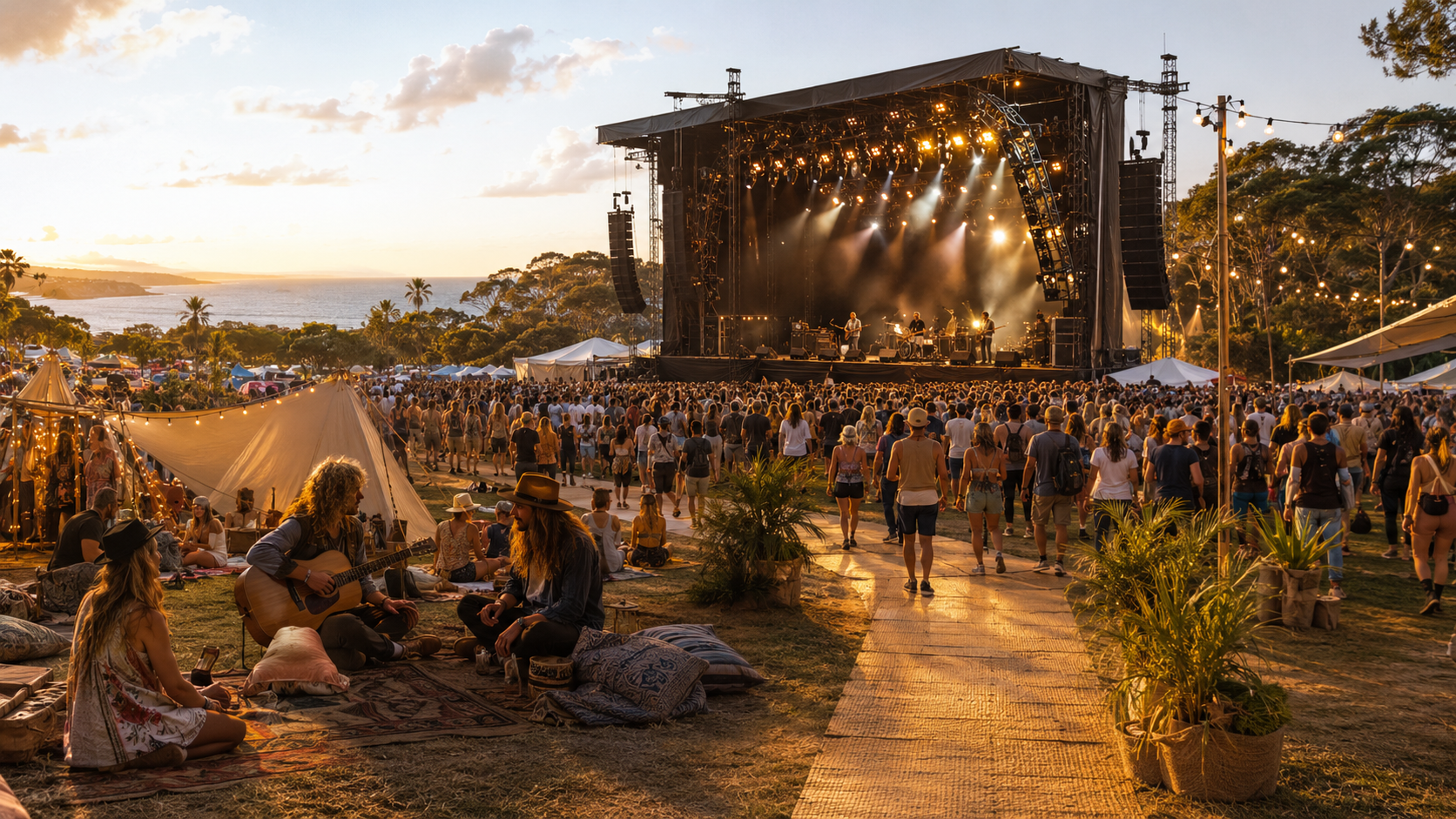
A Competitive Year for Australian Festivals
Australia’s 2026 festival season is shaping up as a major test for the live music industry. Fans still want large-scale shared experiences, but they are becoming more selective. A festival ticket is no longer judged only by the headline act. It is judged by the entire cost of attending, including travel, accommodation, food, weather risk and the likelihood of a smooth event.
This is why the country’s best-known festivals matter so much. Events such as Bluesfest Byron Bay and Splendour in the Grass are not only entertainment brands. They are indicators of the health of Australia’s festival economy.
Bluesfest and the Value of Longevity
Bluesfest stands apart because of its history and artistic focus. It has built its name through blues, roots, soul, folk, rock and globally respected performers. Unlike festivals that depend heavily on youth trends, Bluesfest has a deeper relationship with audiences who care about live musicianship.
In 2026, that history is both a strength and a responsibility. The festival must protect what made it respected while adapting to new conditions. Audiences now expect easier digital access to information, better site comfort, strong food options and clear communication before they commit to travel.
Bluesfest’s best opportunity is to position itself as a premium cultural event rather than just another festival. Its audience is likely to value quality, atmosphere and memorable performances over short-term hype.
Splendour and the Pressure of Scale
Splendour in the Grass is one of the most discussed names in Australian festival culture because it has represented scale, youth energy and international relevance. Its strongest years helped define what a modern Australian camping festival could look like.
But scale brings risk. Large festivals are expensive to produce, and fans need convincing that the experience is worth the price. In 2026, Splendour’s success would depend on more than a poster filled with big names. It would need a complete strategy: strong programming, reliable logistics, improved crowd experience, clear safety messaging and a sense of cultural urgency.
The festival’s biggest advantage remains its brand recognition. Even when the market is difficult, people talk about Splendour. That attention is valuable if it is matched by a compelling event.
The Festivalgoer Has Changed
One of the most important real-world shifts is audience behaviour. Many fans now buy tickets later, wait for lineup details or compare several festivals before spending. Cost-of-living pressure has made early commitment harder.
This affects organisers because festivals need early ticket revenue to manage cash flow. It also changes marketing. Successful events in 2026 must give fans reasons to act early: exclusive pricing, transparent planning, strong lineup phases and confidence that the event will deliver.
Tourism and Local Economies
Major festivals also matter because they support tourism. Regional events can bring visitors to hotels, restaurants, transport services and local businesses. Byron Bay’s connection to Bluesfest and Splendour is a strong example of how music can become part of a destination’s identity.
However, communities also expect responsible management. Noise, traffic, waste, safety and environmental impact must be handled carefully. In 2026, festival credibility will depend on how well organisers balance entertainment with local responsibility.
The Events Most Likely to Stand Out
The strongest Australian festivals in 2026 will be those that combine emotional appeal with operational discipline. Fans want unforgettable performances, but they also want to feel safe, informed and respected.
Bluesfest and Splendour remain two of the most important names because they show opposite sides of the same market. One is built on musical heritage. The other is built on contemporary cultural impact. Both will need to prove that major festivals can still matter in a more cautious, demanding era.