When Roller Coasters Meet Digital Worlds
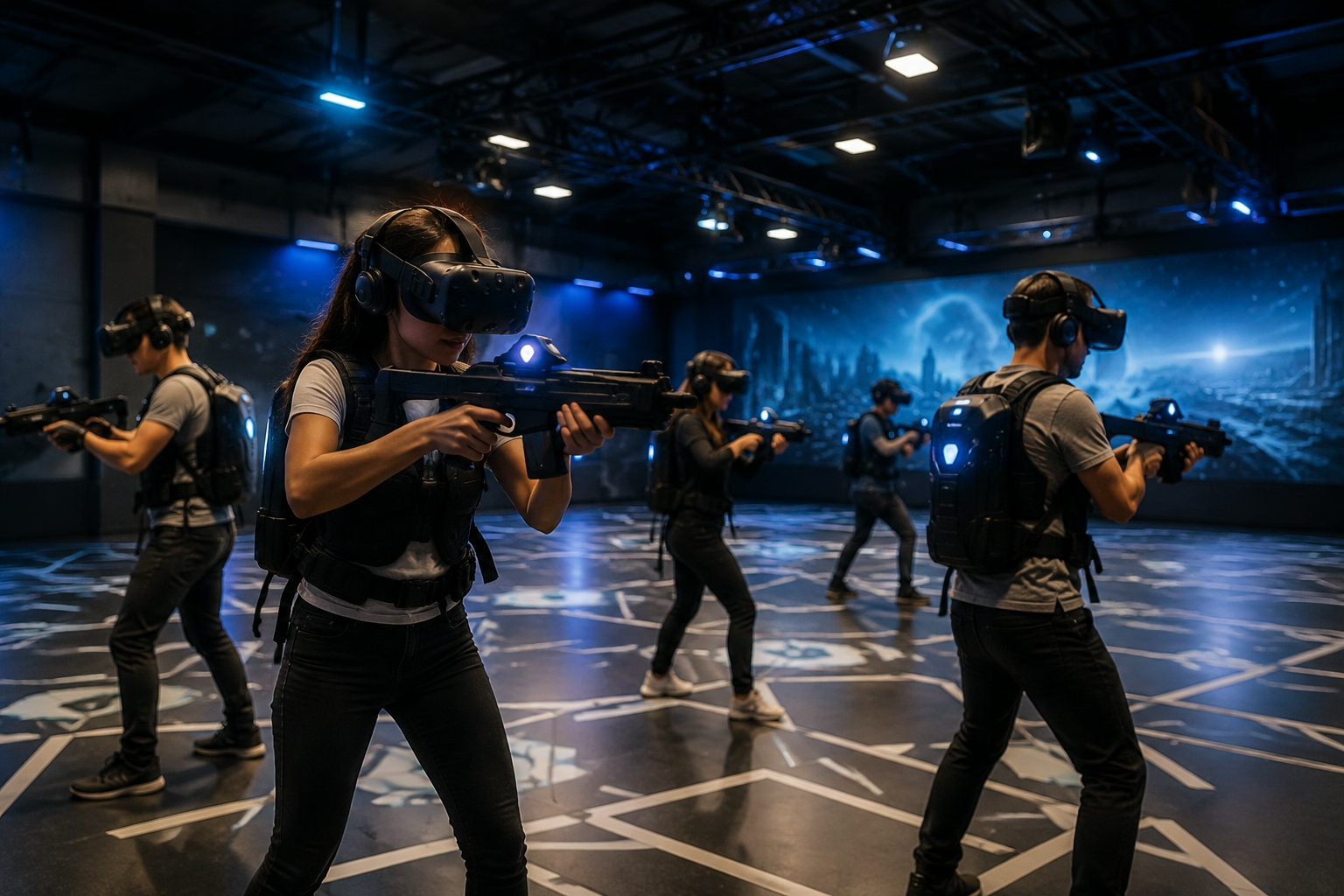
Australia’s tourism sector has long relied on natural landscapes and wildlife encounters, but a new wave of technological innovation is changing the visitor experience. Theme parks like Dreamworld on the Gold Coast and Luna Park in Sydney are integrating virtual reality headsets into existing rides, allowing passengers to battle dragons or dive through coral reefs while physically experiencing the twists and turns of a roller coaster.
This hybrid model solves a major problem: how to refresh ageing attractions without expensive physical reconstruction. By updating the digital layer, operators can rebrand a coaster every few months. Dreamworld’s Sky Voyager simulator, for example, uses 4K drone footage combined with motion seats to fly guests over Uluru, the Great Barrier Reef, and the Twelve Apostles. The ride’s digital content was refreshed in early 2026 with new Aboriginal storytelling elements developed in collaboration with local elders.
Museums Turn Artifacts into Interactive Worlds
Cultural institutions are also embracing immersive technology. The Australian Museum in Sydney launched a permanent AR exhibit where visitors use tablets to see extinct megafauna walking through the galleries. At Melbourne’s Immigration Museum, a VR room lets guests step into the shoes of a 19th-century migrant arriving by ship, complete with ambient audio and tactile feedback.
These installations are not gimmicks. According to a 2026 research snapshot by Screen Australia, interactive digital projects in cultural venues increased visitor dwell time by an average of 27 minutes and improved knowledge retention by 34% compared to static displays. The full report is accessible at https://www.screenaustralia.gov.au/ .
Real-World Impact: Indigenous VR Storytelling
One of the most powerful applications is Indigenous storytelling. The Carriberrie VR experience, developed with the Bangarra Dance Theatre, transports viewers to ceremonial performances across remote Australia. In 2026, the experience expanded to 12 standalone headsets at the National Museum of Australia, with timed entry due to high demand.
Visitors consistently describe the experience as emotional and transformative—a stark contrast to traditional museum fatigue. The success has prompted a AUD 4.2 million government grant to fund five new Indigenous-led immersive projects through 2028. These projects will combine motion capture, photogrammetry, and spatial audio to preserve languages and ceremonies that are at risk of disappearing.
Challenges and the Road Ahead
Despite the enthusiasm, Australian cultural institutions face hurdles: high hardware maintenance costs, staff training, and content licensing. Many small regional museums cannot afford custom VR development, leading to a rise in off-the-shelf solutions from Australian studios like Phoria and S1T2. These studios create scalable templates that museums can customise with local history.
As 5G coverage expands into regional centres, the next frontier is cloud-streamed VR that removes the need for powerful local computers. This would let even a small gallery in Broken Hill offer world-class immersive exhibits. Industry analysts predict that by 2028, one in four Australian cultural sites will feature some form of interactive digital experience.