A Material Shift Towards a Greener Future
The conversation around Asian influence in Australian fashion is often dominated by aesthetics, but a more profound revolution is taking place at the material level. Australian designers, facing increasing pressure to address the environmental toll of the fashion industry, are looking to Asia not just for stylistic cues but for groundbreaking solutions in textile innovation and sustainable practice. This shift marks a move from passive consumption of trends to active collaboration on creating a more ethical and ecologically sound fashion future.
Learning from Tradition: Ancient Wisdom for Modern Problems
Long before sustainability became a buzzword, many Asian cultures had perfected methods of creating beautiful, durable textiles with minimal environmental impact. Techniques like Japanese shibori and aizome (indigo dyeing), which use natural pigments and intricate resist-dyeing methods, are now being revived and taught in Australian design schools. Similarly, the principles of Korean jogakbo, a patchwork technique born from the desire to use every scrap of precious fabric, resonate deeply with modern zero-waste design philosophies. By integrating these time-honored practices, Australian brands are creating garments with a unique patina and a powerful story of conservation.
The High-Tech Eco-Fabrics from the East
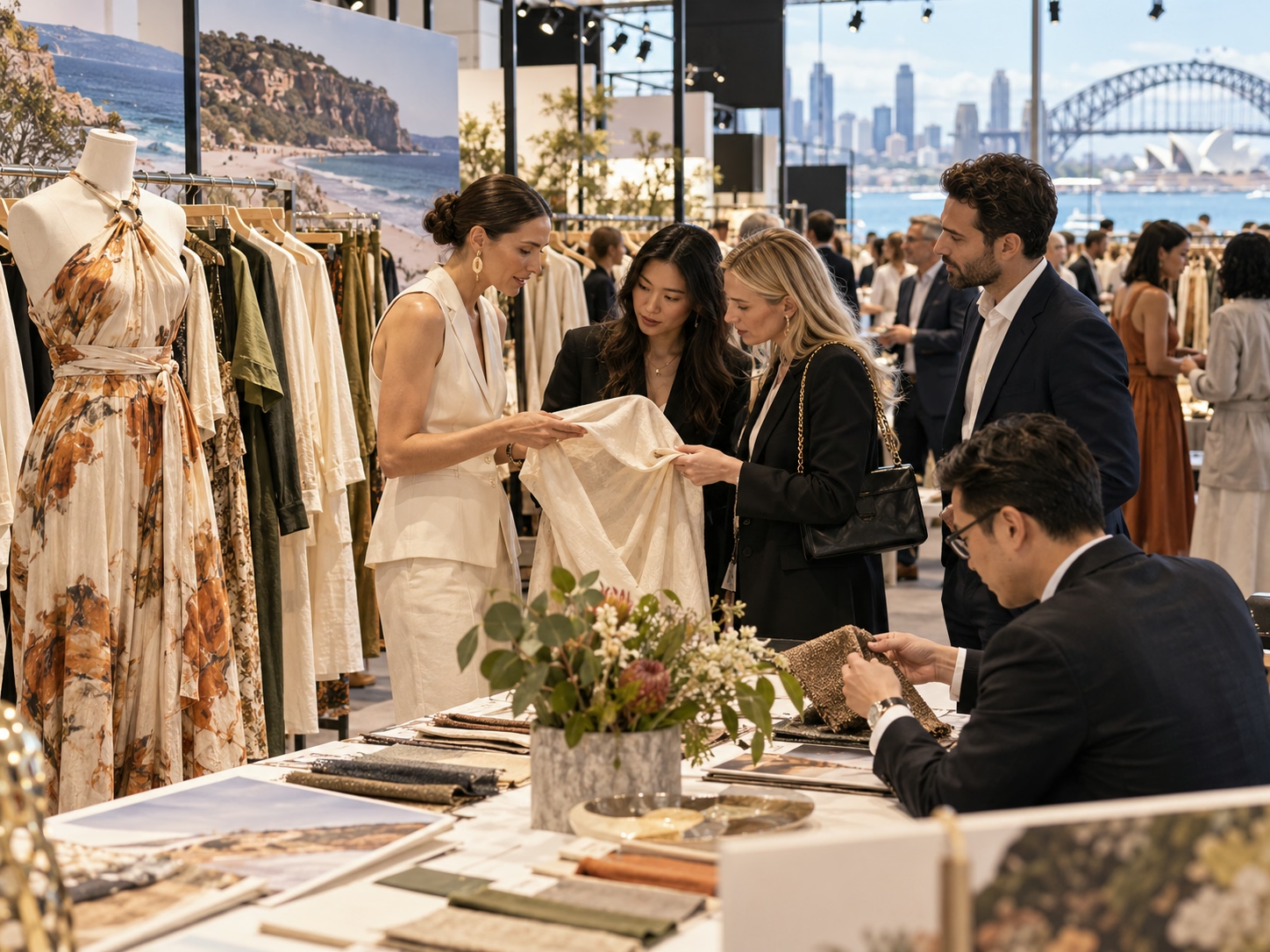
Beyond traditional crafts, Asia is the epicenter of high-tech textile innovation. Countries like Japan, South Korea, and Taiwan are leading the world in developing closed-loop manufacturing systems and next-generation fibers. Australian labels are now sourcing fabrics made from recycled PET bottles, agricultural waste like pineapple leaves (Piñatex) and orange peels, and innovative wood-based fibers like Tencel™, which are produced in a closed-loop process that recycles water and solvents. This adoption of advanced materials is helping Australian brands drastically reduce their carbon footprint and water usage without compromising on quality or comfort.
Quantifying the Green Transition
The impact of this technological and philosophical exchange is significant and growing. A 2026 report by the Australian Trade and Investment Commission (Austrade) on the future of the fashion sector noted a 45% year-on-year increase in Australian importation of certified sustainable textiles from the Asian region. The report states that collaboration with Asian material scientists is “no longer a niche strategy but a core component of business planning for forward-thinking Australian fashion houses.”
From Aesthetic to Ethos: A New Design Paradigm
This focus on materials is reshaping the very ethos of Australian fashion design. The creative process now often begins with a fabric’s environmental footprint and its story of origin, rather than just its visual appeal. This has fostered a deeper level of engagement between Australian designers and Asian producers, leading to true partnership. The resulting garments are not only stylish but serve as tangible proof that fashion can be a force for good. This alignment of aesthetic desires with ethical responsibilities is creating a powerful new narrative, positioning Australian fashion as a leader in the global movement towards circularity and mindful consumption.