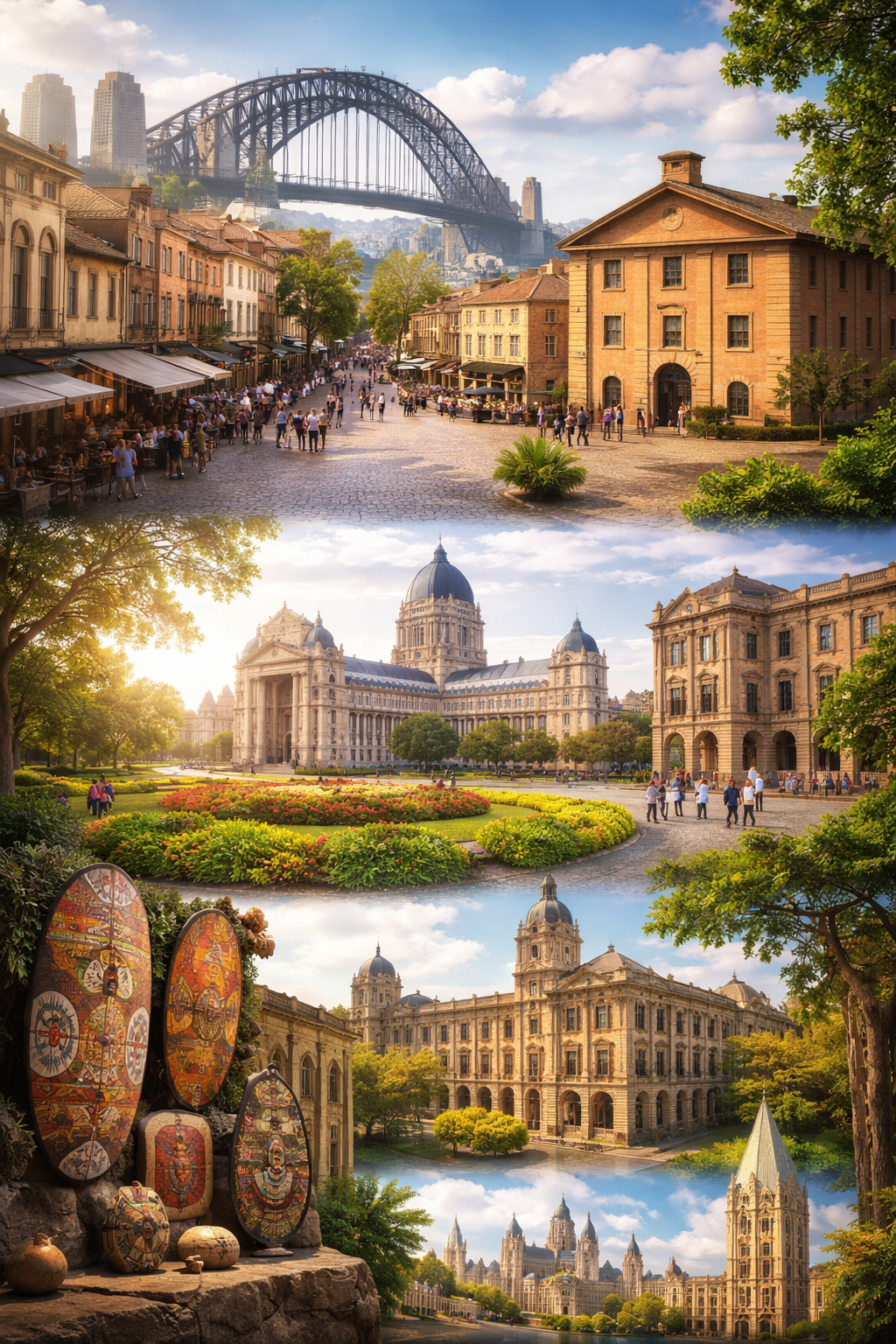
Australia’s major cities, Sydney and Melbourne, are not only known for their modern skyline and vibrant culture but also for their deep-rooted history. Visitors can explore the stories of the past through various historical landmarks that stand as witnesses to Australia’s colonial past, Indigenous heritage, and the shaping of the modern nation.
Sydney is often considered the birthplace of modern Australia, and its historical significance is reflected in its preserved sites. The Rocks, a lively historical district near Circular Quay, is the perfect place to start. This area was one of the first places European settlers made their mark after arriving in 1788. Visitors can wander through narrow laneways, explore historic buildings, and visit The Rocks Museum, where they can learn about the lives of convicts, settlers, and the area’s transformation over the centuries.
A short distance from The Rocks, another important historical site is The Sydney Opera House. While it is more famous for its contemporary design, the land on which the Opera House sits has been historically significant to the Gadigal people of the Eora Nation, who have lived in the area for thousands of years. The building itself, designed by Danish architect Jørn Utzon, was opened in 1973 and has become an icon of Australian culture, symbolizing both the modern and colonial periods of Sydney’s development.
In Melbourne, the legacy of the Victorian era is alive and well. The Melbourne Museum is a treasure trove of historical exhibits, featuring sections dedicated to Indigenous history, the Victorian gold rush, and Australia’s development through the 19th and 20th centuries. One of the museum’s highlights is the Bunjilaka Aboriginal Cultural Centre, which offers visitors the opportunity to connect with the history of Australia’s First Nations peoples.
The Old Treasury Building in Melbourne is another key historical site. Constructed in 1858, it was once the seat of the Victorian government’s treasury and played a significant role in Melbourne’s gold rush economy. Today, the building houses a museum showcasing Melbourne’s early history, including its rapid growth during the 1850s gold rush.
An iconic landmark of Melbourne’s history is Federation Square, which commemorates the 100th anniversary of Australia’s federation. It’s home to several museums, including the Australian Centre for the Moving Image and the Ian Potter Centre, which delve into the cultural and artistic history of Australia. Federation Square is also a place where locals and tourists gather to celebrate the national identity of Australia.
The historical sites in both Sydney and Melbourne provide an invaluable experience, giving visitors a chance to explore the deep and diverse roots of the Australian story. From the convict history of Sydney to the gold rush era of Melbourne, each landmark offers a unique glimpse into Australia’s past.