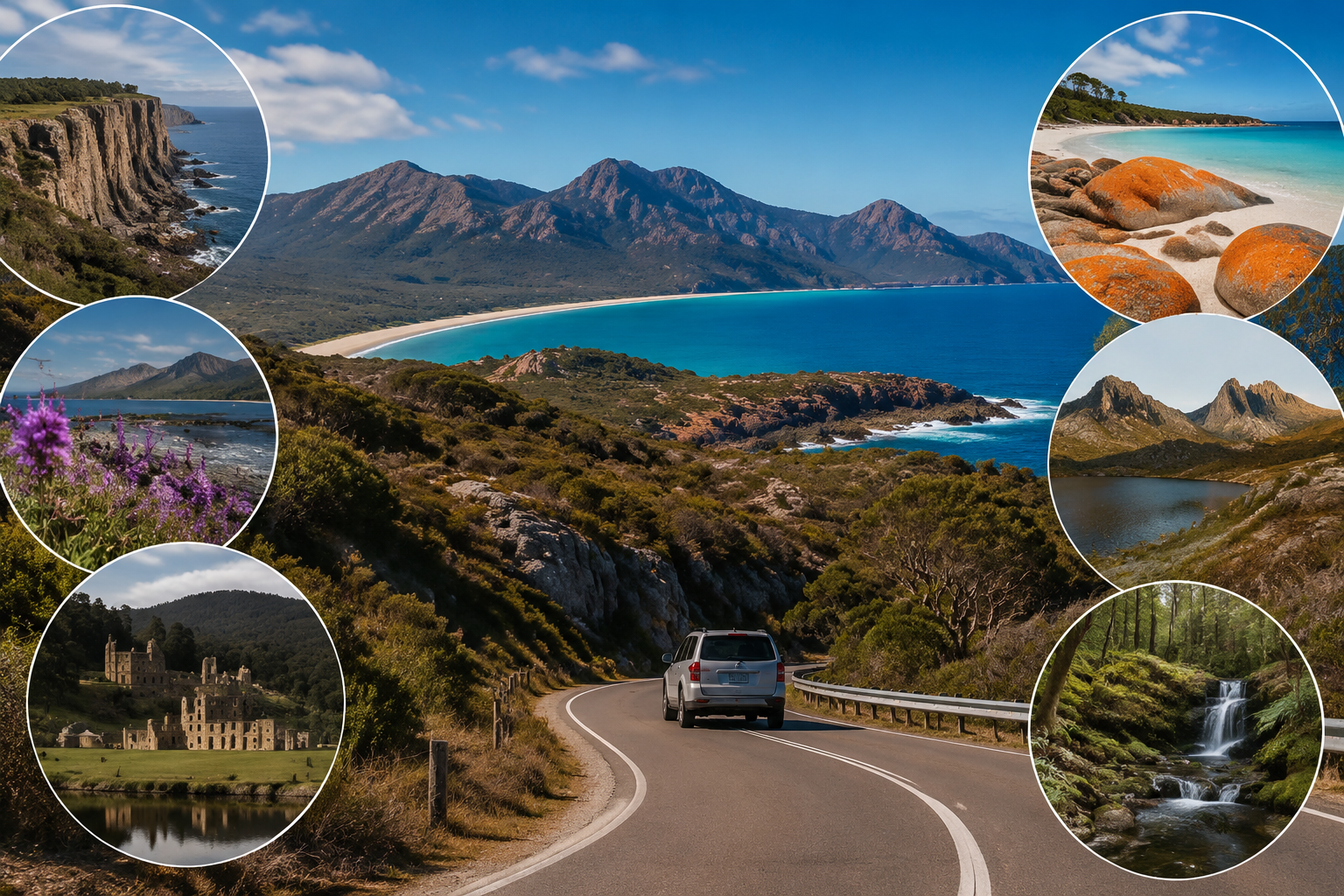
The road trip from Perth to Exmouth covers more than 1,200 kilometers through one of Australia’s most expansive coastal regions. The route combines desert landscapes, fishing towns, limestone formations and access to the World Heritage-listed Ningaloo Coast.
Its scale is part of the attraction, but also its main challenge. Travelers must plan fuel, accommodation and driving hours more carefully than they would on a short coastal route near a major city.
Perth to the Pinnacles
North of Perth, the first major detour is Nambung National Park, home to the Pinnacles Desert. Thousands of limestone formations rise from yellow sand, creating a landscape that appears dramatically different at sunrise and late afternoon.
Cervantes is the nearest town and a practical overnight stop. Nearby Jurien Bay offers beaches, marine activities and a relaxed coastal setting.
Drivers should avoid attempting Perth, the Pinnacles and distant northern towns in a single day. Fatigue can build quickly on long, straight highways.
Geraldton, Kalbarri and Coastal Cliffs
Geraldton is the largest regional center on the route and an important location for fuel, groceries and vehicle checks.
Farther north, Kalbarri combines river landscapes with ocean cliffs. Kalbarri National Park is divided into inland and coastal sections.
Nature’s Window and the Kalbarri Skywalk overlook the Murchison River gorge, while coastal sites such as Natural Bridge and Island Rock reveal the impact of erosion along the Indian Ocean.
Temperatures inland may be significantly higher than along the coast. Walks should be scheduled early, and travelers must carry enough drinking water.
Shark Bay and the Question of Wildlife Tourism
The Shark Bay World Heritage Area introduces seagrass meadows, marine wildlife and unusual coastal environments. Shell Beach is formed from countless small shells rather than conventional sand.
Monkey Mia is known for its wild dolphin encounters. The experience is regulated to reduce disruption to natural behavior. Visitors should follow ranger instructions and avoid assuming that wildlife sightings are guaranteed.
This raises an important issue in modern road-trip tourism: wildlife encounters should be judged by their conservation standards, not simply by the opportunity to obtain close photographs.
Coral Bay, Exmouth and Ningaloo Reef
Coral Bay and Exmouth are the main gateways to Ningaloo Reef. Unlike many reef systems, sections of Ningaloo are accessible directly from shore.
Snorkeling, diving and seasonal wildlife tours are major attractions. Tour operators may offer encounters involving whale sharks, manta rays or humpback whales, depending on the season and environmental conditions.
Cape Range National Park, near Exmouth, contains canyons, beaches and snorkeling sites such as Turquoise Bay. Strong currents can occur, so visitors should understand local conditions before entering the water.
Destination information and regional travel planning are available through the official Tourism Western Australia website.
Fuel, Road Conditions and Animal Hazards
Fuel availability becomes more limited north of major towns. Drivers should note opening hours and refuel before entering remote stretches.
Kangaroos, emus, goats and livestock may cross the highway. Driving after dark substantially increases the risk of animal collisions.
Some travelers underestimate wind, heat and distances because the main highway is sealed. However, mechanical problems remain serious when services are hundreds of kilometers away.
Carrying extra water, checking tire pressure and informing someone of the itinerary are basic but important precautions.
Spending More Time in Fewer Places
A seven-day itinerary is possible, but ten to fourteen days provides a safer and more rewarding pace. Longer stays also direct more tourism spending toward regional communities rather than concentrating it at fuel stops.
The Perth-to-Exmouth drive is not simply a transfer to Ningaloo Reef. The changing geology, settlement patterns and marine environments along the route are central to the experience.