Inclusive Tourism Is Changing Australia’s Visitor Experience
For travellers with disabilities, an unforgettable holiday depends on more than spectacular scenery. Suitable transportation, reliable facilities and accessible recreational activities determine whether a destination can genuinely deliver an enjoyable experience.
Across Australia, tourism providers are increasingly recognising these requirements by introducing specialised equipment, adaptable attractions and more inclusive visitor services.
Tourism Research Australia’s analysis of 2024 travel activity recorded approximately 70.5 million trips involving travellers with accessibility needs. These journeys generated AUD 29.2 billion in expenditure, highlighting the economic importance of removing barriers within the visitor economy.
By 2026, accessibility has become an increasingly visible feature of Australia’s tourism development discussions, extending into adventure activities previously considered difficult for visitors with mobility limitations.
The Great Barrier Reef Opens New Opportunities for Marine Tourism
Experiencing the Great Barrier Reef is a major attraction for international and domestic tourists visiting Queensland.
However, traditional marine excursions can present difficulties for travellers who require mobility assistance, particularly when transferring between boats, pontoons and swimming areas.
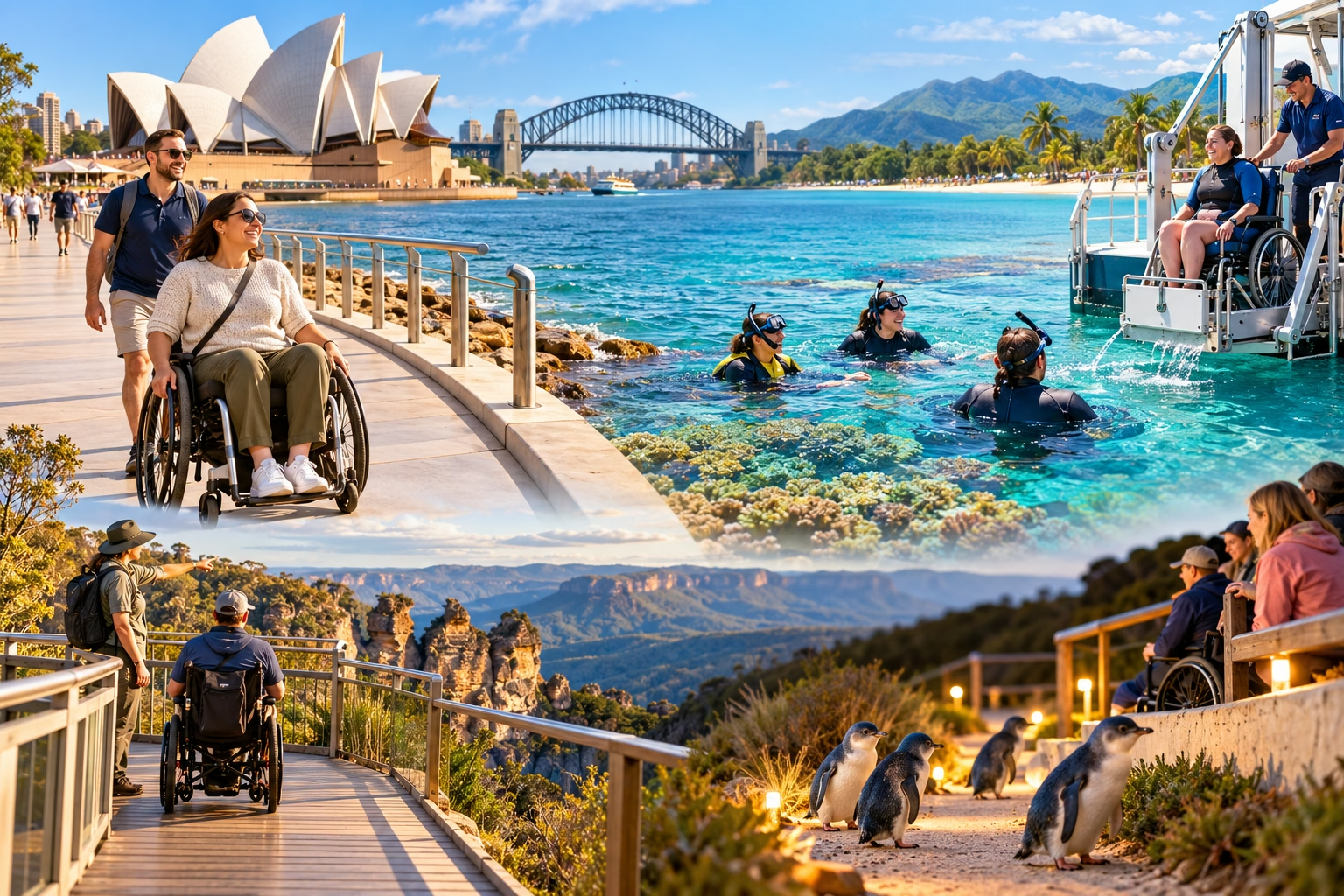
Quicksilver Cruises addresses several of these challenges through accessible facilities on its Agincourt Reef experiences. A specially equipped pontoon includes a water-powered lift designed to help visitors with limited mobility enter the water.
The availability of adapted marine infrastructure expands opportunities for visitors to experience coral ecosystems rather than observing them exclusively from shore.
Cairns provides additional accessible attractions, including its Esplanade pathways, accommodation facilities and beach wheelchair options in surrounding coastal communities.
Brisbane’s 2026 Investment Signals a New Direction
The future of Australian accessible tourism is also being shaped by proposed adventure infrastructure.
On May 6, 2026, the Queensland Government announced AUD 2.1 million in funding for the Brisbane River Icons project through its Tourism Icons Investment Fund.
The proposed development features a wheelchair-accessible flying fox connecting Kangaroo Point and the City Botanic Gardens, accessible riverboats and elevated picnic experiences.
These attractions were announced as planned developments, rather than completed services.
Details are available in the official Queensland Government announcement.
The initiative highlights how tourism planners are beginning to consider accessibility during the creation of adventurous experiences, instead of treating disability access as a later modification.
Inclusive Wildlife and Cultural Attractions Gain Attention
Victoria’s Phillip Island illustrates how wildlife tourism can accommodate different visitor requirements.
The Penguin Parade incorporates accessibility provisions for wheelchair users and visitors with sensory sensitivities. Quiet spaces and sensory-support equipment help make wildlife encounters more comfortable for people requiring reduced stimulation.
In Sydney, the Opera House similarly supports inclusive cultural participation through mobility access tours and selected relaxed performances.
The Blue Mountains also provide accessible sightseeing opportunities, allowing visitors with mobility limitations to enjoy natural landscapes through designated pathways and suitable attractions.
Together, these experiences demonstrate that inclusive tourism encompasses both physical accessibility and personalised visitor needs.
Planning Remains Crucial for Barrier-Free Holidays
Although Australian destinations are expanding their facilities, not every activity can accommodate every accessibility requirement.
Visitors should verify transportation arrangements, wheelchair measurements, bathroom specifications, equipment availability and assistance options before booking.
Tourism operators also benefit from publishing precise accessibility information rather than relying on general descriptions such as “disability-friendly.”
Australia’s growing selection of inclusive experiences shows how accessible tourism can combine independence, adventure and cultural participation while opening destinations to a broader travelling population.