The settings where Australians spend their time can influence health as powerfully as individual advice.
A child who can safely walk to school, an employee with access to nutritious meals and an older adult living near an accessible park all experience different opportunities for healthy living.
This environmental perspective is becoming increasingly important to Australia’s response to obesity.
For 2026, reducing obesity requires action across the places where people learn, work, shop and socialise. Programs will have greater impact when healthy behaviour is built into daily routines rather than treated as an additional task.
Australia’s Healthy Food Partnership is one official initiative focused on collaboration around healthier food choices and the food supply. Information about the program is available from the Department of Health and Aged Care.
Schools Are a Critical Starting Point
Childhood obesity is a sensitive issue. Poorly designed programs can create stigma, body dissatisfaction or unhealthy relationships with food.
The aim should not be to publicly single out children according to body size.
Instead, schools can create healthier environments for everyone through nutritious food policies, physical education, active play and practical food literacy.
Children also need protection from the idea that health is determined by appearance alone. Fitness, sleep, emotional wellbeing and healthy eating patterns all matter.
Families Need Support, Not Blame
Parents make food decisions within real constraints.
Time, income, transport, cultural preferences and product availability all influence household routines. Effective family programs should therefore provide realistic guidance instead of assuming every household has identical resources.
Community cooking programs, affordable recreation and family-based health services can make advice easier to apply.
Urban Design Can Become an Obesity-Prevention Tool
The design of towns and cities affects physical activity.
Neighbourhoods with connected footpaths, safe crossings, cycling infrastructure, parks and nearby services can create more opportunities for routine movement.
By contrast, communities built around long car journeys may make daily activity more difficult.
Urban planning is not usually described as obesity treatment, yet its influence can extend across entire populations.
The challenge is particularly complex in regional and remote Australia, where distance and climate may limit conventional transport solutions. Local adaptation is therefore essential.
Workplaces Also Shape Adult Health
Many Australian adults spend a large part of the day at work.
Long periods of sitting, shift work, irregular meals and workplace stress can influence health behaviours. Employers cannot solve obesity, but they can help create supportive conditions.
Practical measures may include healthier food options, appropriate breaks, active commuting support and wellbeing services.
Programs are most likely to succeed when participation is voluntary and employees are not judged according to body size.
Health Services Must Connect Prevention With Treatment
Environmental improvements will not remove the need for medical care.
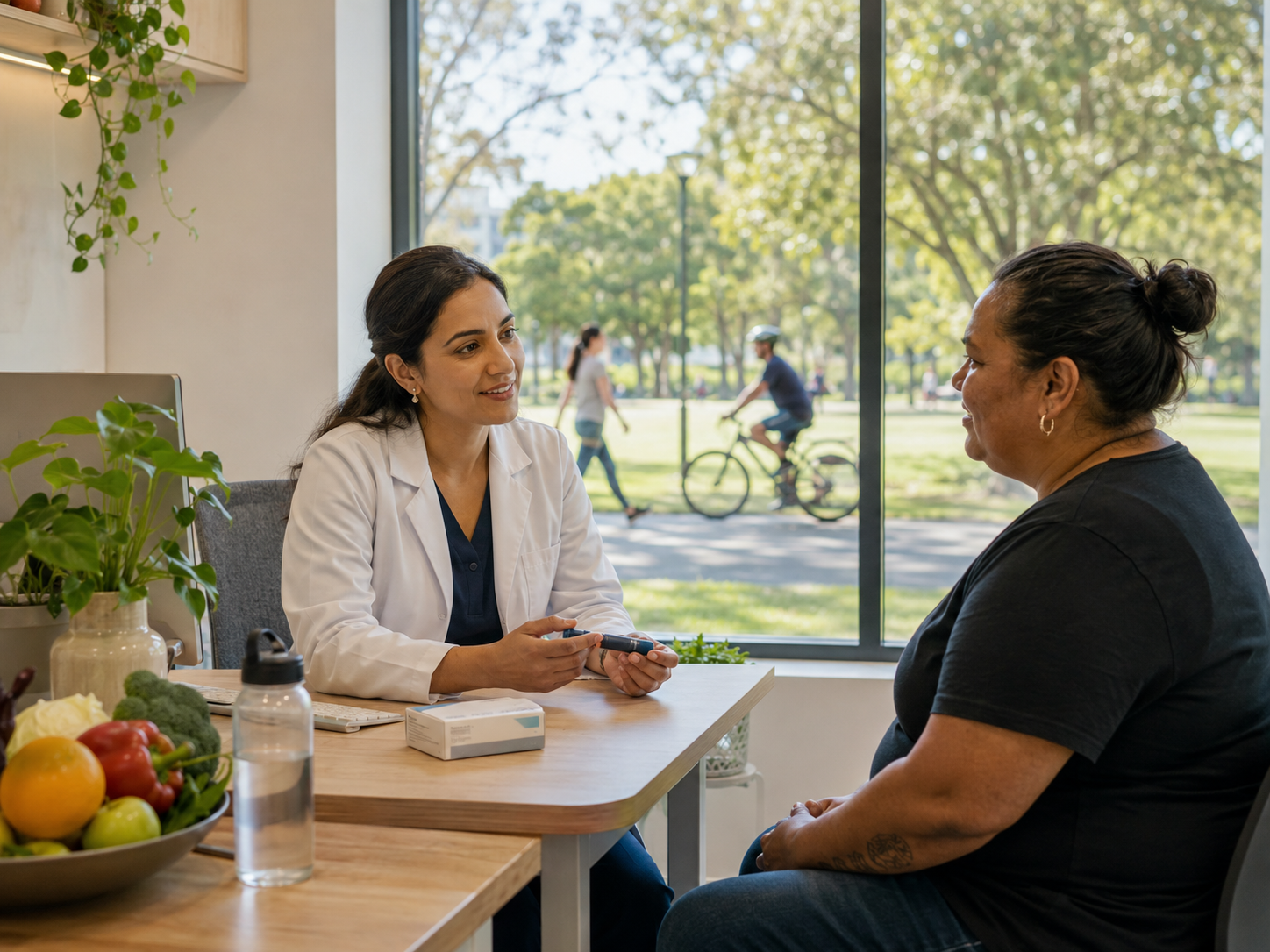
People already living with obesity may require individual treatment involving primary care, dietetics, psychology, exercise support, medication or specialist services.
The strongest model links these services rather than treating them as separate responses.
Australia also needs to ensure that programs reach communities with greater health and economic disadvantage. A national strategy cannot be considered successful if improvements occur only in wealthier areas.
What Australia Can Prioritise in 2026
The biggest opportunity is to make prevention visible in everyday life.
Healthier school environments, supportive families, walkable neighbourhoods and accessible treatment can work together.
There is no single intervention capable of reversing a complex national health problem. The more realistic approach is to reduce the number of barriers people face each day.
Australia’s progress will depend on whether healthier environments become normal, inclusive and available regardless of age, income or postcode.