From Granville to a National Footprint
When Andre and Carole Estephan opened their first El Jannah in Granville in 1998, the ambition was modest: share the flavours of Lebanon with Western Sydney. Twenty-eight years later, the brand is executing a rollout that few Australian quick-service operators have attempted. In May 2026, El Jannah confirmed it was opening sixteen stores in sixteen weeks, including a landmark site in Sydney’s CBD. The pace is not a one-off stunt. It is the opening chapter of a plan to grow from roughly 50 locations to almost 200, backed by General Atlantic, the global growth equity firm that took a controlling stake in late 2025.
The expansion map is deliberately unromantic. More than 25 new restaurants are scheduled across New South Wales, Victoria and the ACT in the next twelve months, with sites in the Sydney CBD, Warringah Mall, Maroubra, Sunbury, South Yarra, Box Hill and Woden. Queensland, South Australia and Western Australia follow. CEO Brett Houldin has described the partnership as the trigger for both national acceleration and the first serious exploration of international markets, including the possibility of taking the Australian-Lebanese flavour profile back to the Middle East.
The Lunch Menu as a Growth Lever
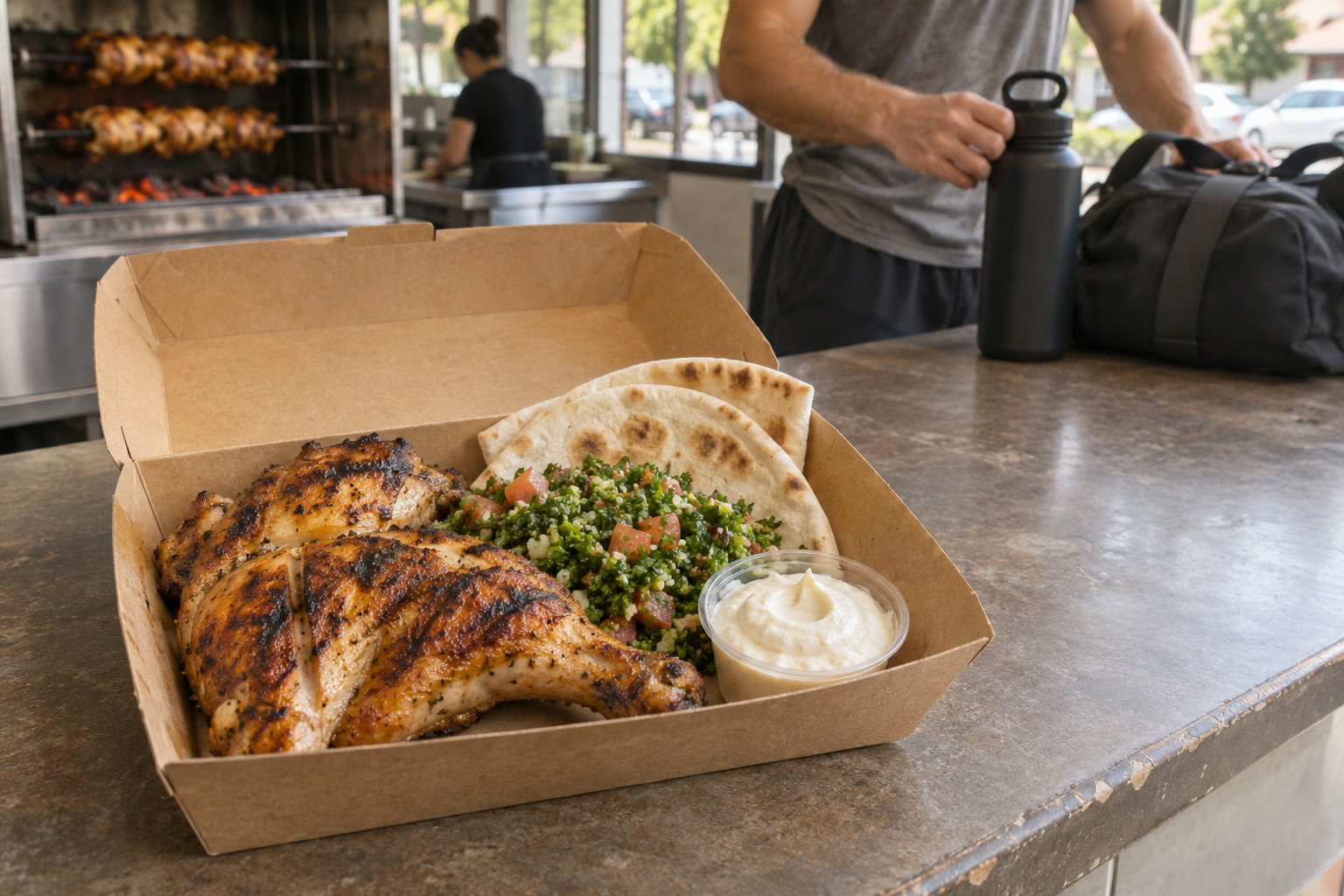
The store rollout is only half the story. El Jannah’s expansion is being paired with a deliberate push into a daypart it had previously under-served: lunch. The “Legendary Lebanese Lunch” range — made-to-order charcoal chicken rolls with chips and a drink for A$14 — is designed to convert the brand from a dinner destination into a weekday habit. CMO Adam Issa told LBB that the business had spent around six months developing the offer and wanted it available nationally, not just in CBD locations. “We wanted to make sure that we could feed anyone in Australia on the road, at work, at home, after school,” he said.
The lunch push matters because it changes the unit economics of each store. A charcoal chicken shop that trades primarily at dinner carries fixed costs across the full day. A lunch range spreads those costs, increases transaction frequency and builds a digital relationship with customers who might otherwise default to a sandwich or a bowl. The A$14 price point is calibrated to compete with mid-market lunch options while preserving the brand’s perception of generosity — a word Issa used repeatedly when describing the offer.
What the Rollout Reveals About the Category
El Jannah’s sprint is not happening in a vacuum. It is the most visible expression of a broader “chicken war” in Australian fast food, where poultry has become the preferred battleground because beef prices remain elevated and chicken lends itself to value-led promotions. The brand’s decision to ban frozen or processed chicken in its supply chain, reported by Real Commercial, is a direct differentiator against larger fried-chicken chains that rely on industrialised supply.
The risk is equally clear. Rapid expansion tests consistency, franchise quality and brand control. El Jannah’s answer has been to retain the Estephan family in the business and to frame the growth as a continuation of the founders’ original hospitality rather than a departure from it. Whether that cultural continuity survives a 200-store network is the question that will define the next phase of Australia’s charcoal chicken revival.