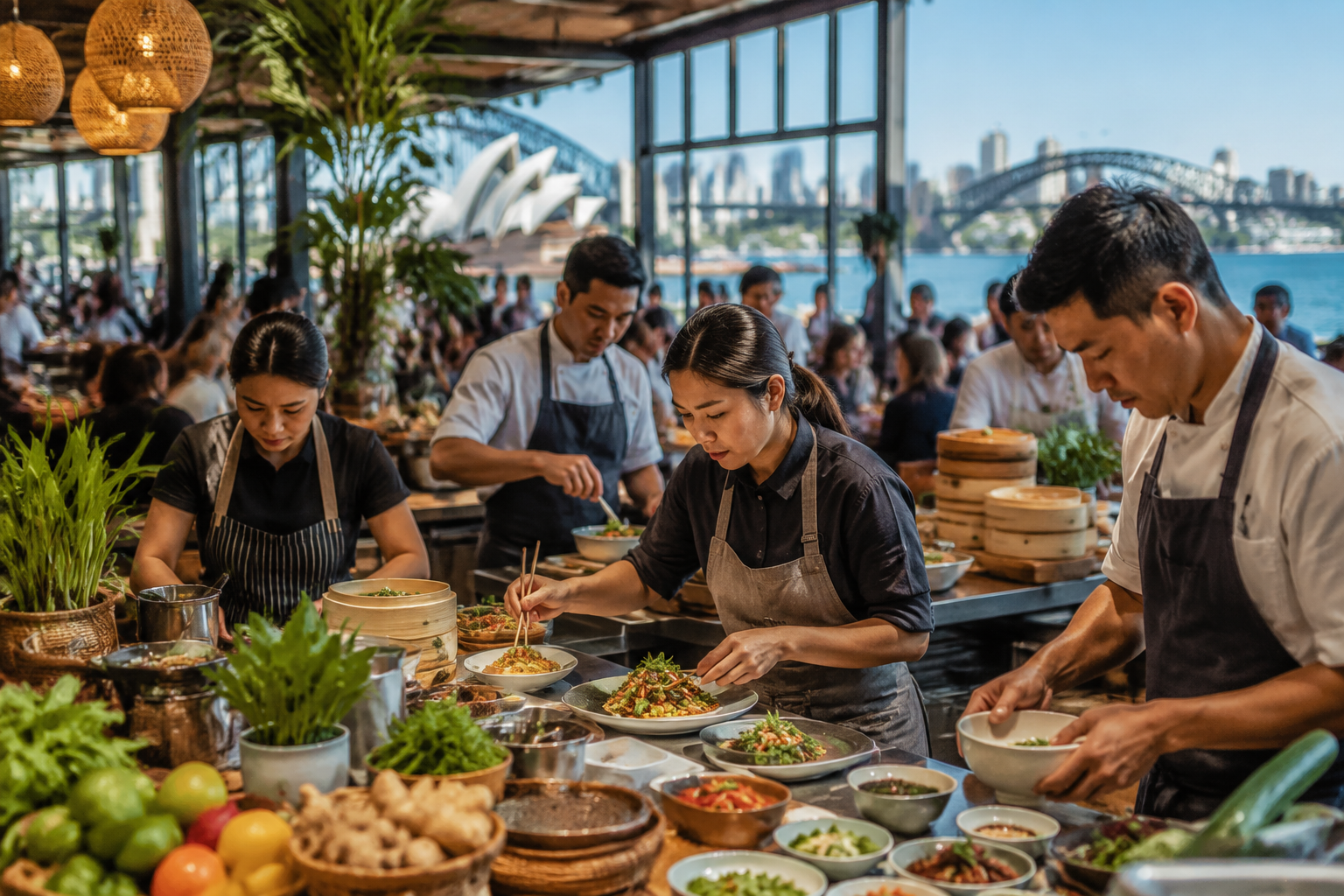
Sydney, August 2026 — On a cool autumn evening in Sydney’s Lakemba, the air is thick with the scent of charcoal-grilled lamb, saffron rice, and sweet kunafa. More than a million visitors are expected to pass through the suburb’s Ramadan night markets this year, making it one of the largest street food events in the Southern Hemisphere. The scene captures a profound shift: halal food in Australia has moved from the margins to the mainstream.
Demographics and the Rise of Halal Dining
According to the Australian Bureau of Statistics’ religious affiliation data, Islam remains one of Australia’s fastest-growing faiths, with more than 800,000 Muslims recorded in the 2021 Census and estimates exceeding one million by 2026. This demographic expansion is not evenly distributed; concentrations in western Sydney, Melbourne’s north, and parts of Brisbane have created dense halal food corridors.
The Ramadan Market Effect
Ramadan night markets have become a cultural institution. In Lakemba, local council data shows food stall applications rose by 28 percent between 2024 and 2026. Traders now sell halal rendang tacos, camel burgers, and rose-flavoured milk cakes, appealing to both Muslim families and non-Muslim visitors who come for the festive atmosphere.
The economic ripple effect is substantial. Local real estate agents report that restaurants with halal certification in these precincts are now attracting higher commercial rents, a sign that halal status is perceived as a business asset rather than a compliance burden.
What Halal Consumers Actually Want
Consumer surveys conducted by Australian food industry groups in early 2026 reveal three consistent preferences. First, authenticity matters: diners want genuine recipes, not watered-down versions. Second, health and hygiene are central; many non-Muslim consumers choose halal outlets because they believe the meat is sourced more carefully. Third, convenience is non-negotiable. Delivery platforms such as Uber Eats and Menulog have expanded halal search filters, and restaurants that update menus with clear halal badges see higher conversion rates.
Beyond the Traditional Menu
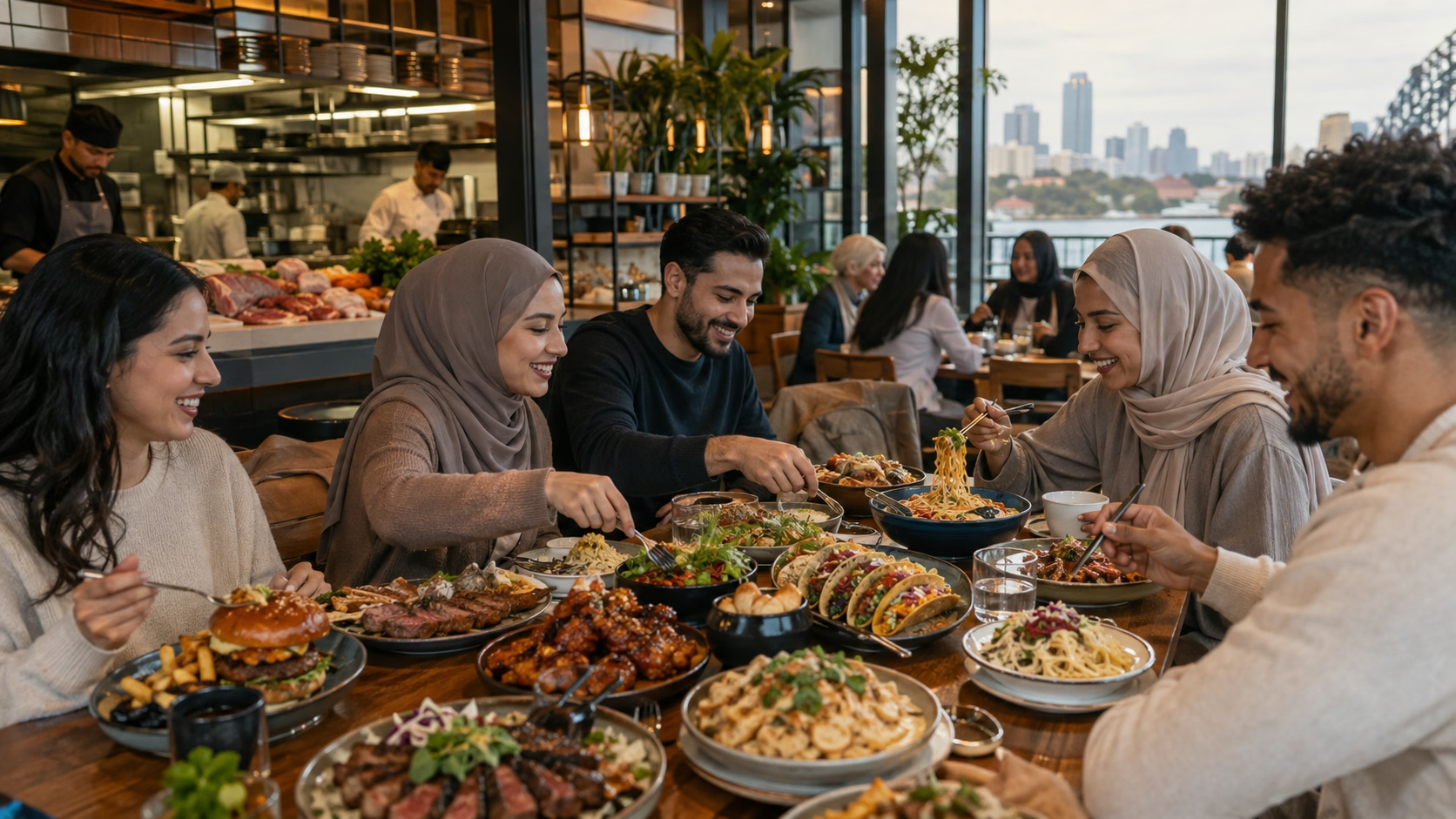
The most striking change is the diversification of cuisines. Halal Korean fried chicken chains have opened in Sydney and Melbourne, while halal-certified ramen bars and Mexican taquerias are attracting long queues. A halal brunch cafe in Melbourne’s Coburg now serves halal beef bacon, eggs, and Turkish-style flatbreads to a mixed crowd every weekend.
This crossover appeal is not accidental. Food manufacturers are recognising that halal certification often aligns with other consumer values, including ethical sourcing and antibiotic-free meat. As a result, halal is becoming a quality signal that reaches far beyond the Muslim community.
The future of halal dining in Australia will be shaped by this broader coalition of consumers. Restaurants that understand flavour, transparency, and cultural authenticity will continue to capture the fastest-growing segment of the Australian food market.