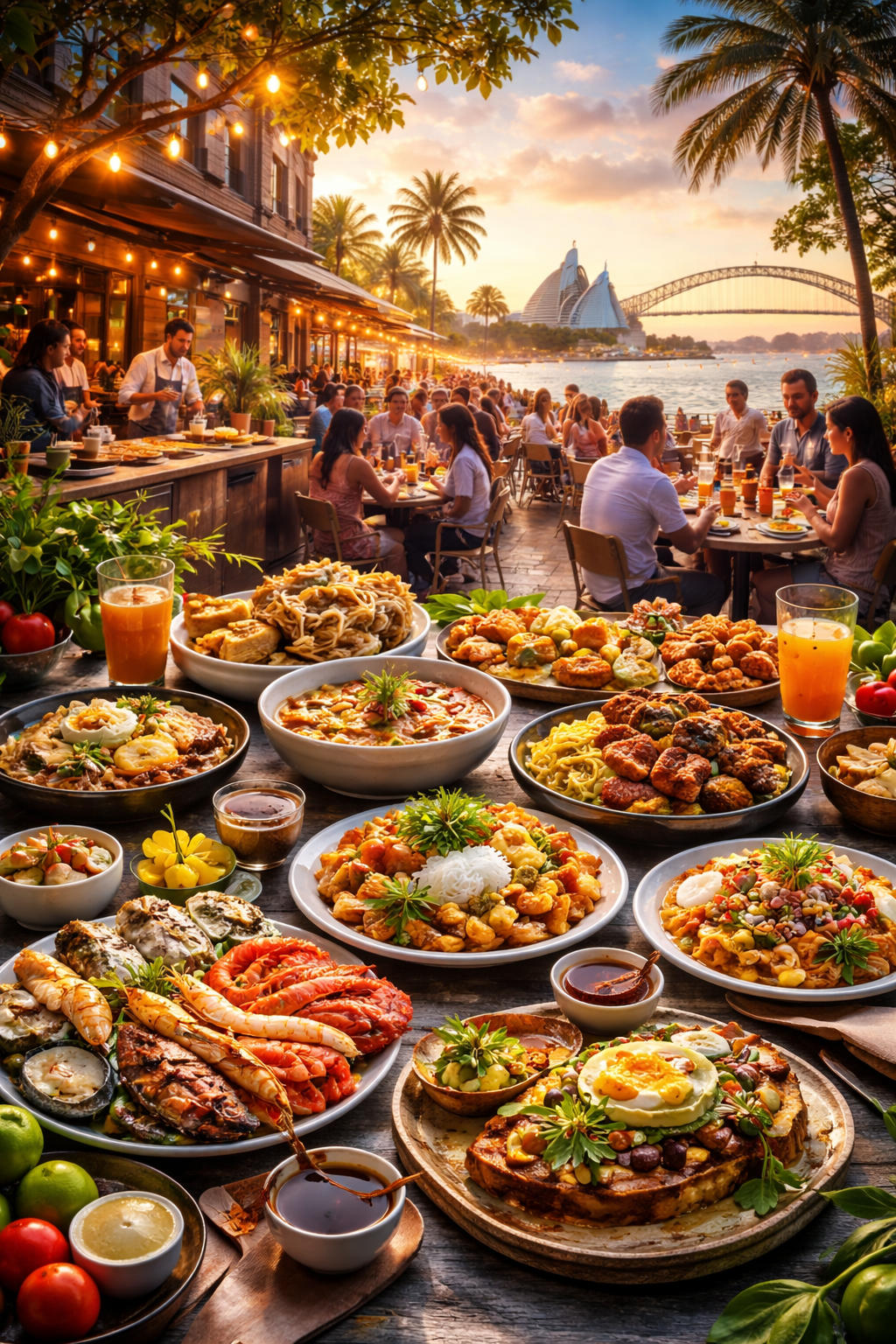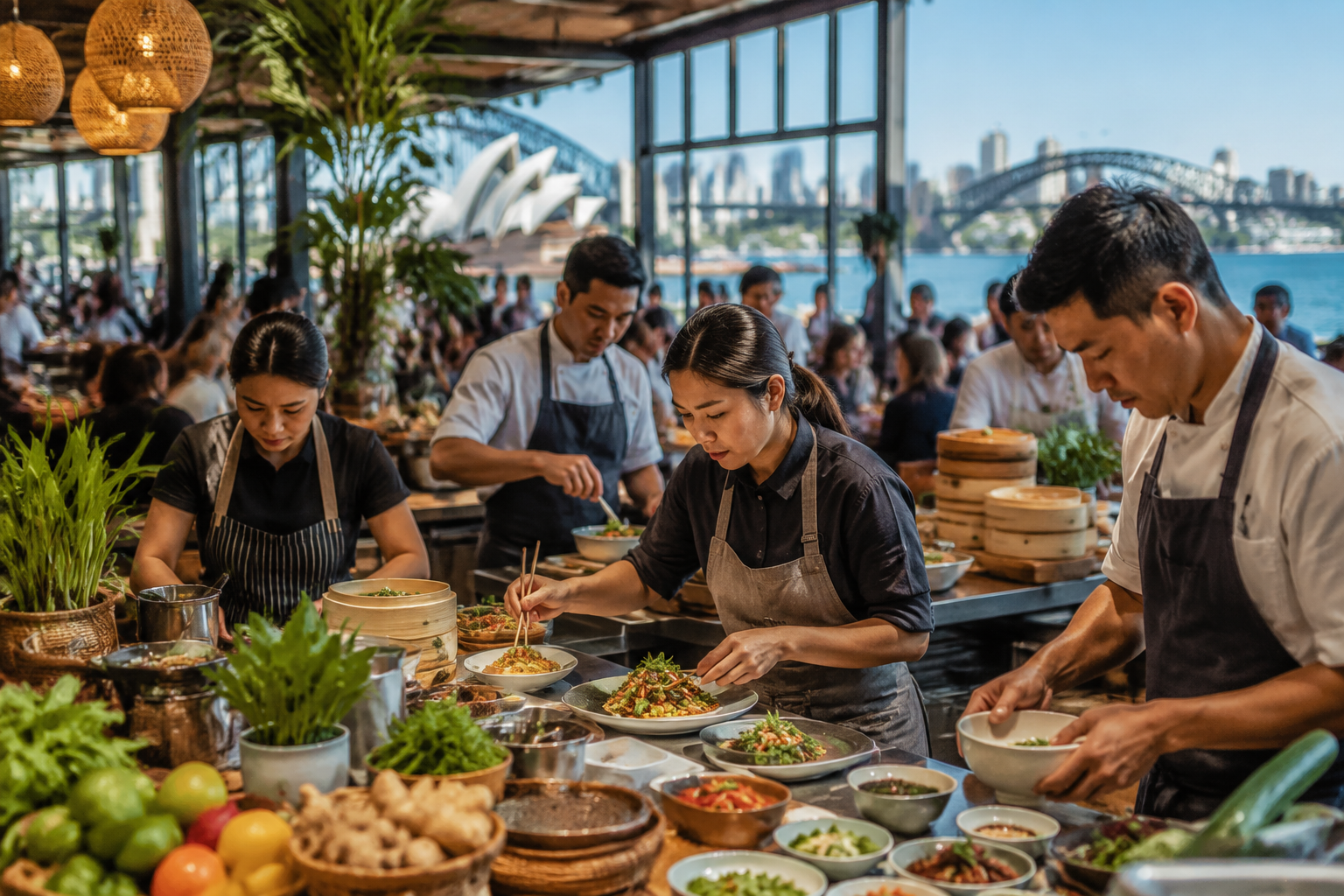
Across Australia’s major cities, Asian food districts have become more than places to eat. They represent migration histories, cultural connections, and the transformation of urban communities. Areas such as Sydney’s Chinatown, Melbourne’s Chinatown, Richmond’s Vietnamese precinct, and Melbourne’s Box Hill have developed into important culinary destinations where Australian and Asian cultures interact.
These districts demonstrate how migration has influenced not only Australia’s food choices but also the identity and economic development of urban neighborhoods.
The Development of Asian Culinary Communities in Australian Cities
The growth of Asian food districts is closely connected to migration patterns. When migrant communities arrived in Australia, they often established businesses near areas where they could find cultural support, affordable commercial spaces, and connections with other migrants.
Chinese communities played a major role in creating some of Australia’s earliest Asian food precincts. Sydney’s Chinatown, for example, developed into a central location for Chinese restaurants, grocery stores, cultural events, and businesses.
Over time, other Asian communities created their own culinary hubs. Melbourne’s Richmond became strongly associated with Vietnamese cuisine after Vietnamese migration increased following the Vietnam War. Today, Victoria Street is recognized for its Vietnamese restaurants, bakeries, and specialty food stores.
Food Precincts Supporting Cultural Preservation
Asian food districts serve an important role in maintaining cultural traditions. Migrant communities use restaurants and markets to preserve regional cooking methods, ingredients, and celebrations.
These areas allow younger generations of migrant families to stay connected with their heritage. A second-generation Asian Australian visiting a traditional restaurant may experience flavors and customs connected to their parents’ or grandparents’ homeland.
At the same time, these precincts introduce Australian visitors to cuisines from different regions of Asia. Instead of presenting Asian food as one single category, these neighborhoods highlight the diversity between Chinese, Vietnamese, Korean, Japanese, Thai, Malaysian, and other culinary traditions.
Economic Impact on Local Communities
Asian food districts contribute significantly to local economies by attracting residents, tourists, and international visitors. Restaurants, supermarkets, cafes, and food markets create employment opportunities while strengthening small business communities.
Tourism organizations increasingly recognize food as a major reason people explore Australian cities. According to Tourism Australia, food and wine experiences are among the important factors influencing international visitors when choosing travel activities. Tourism Australia provides industry insights at: https://www.australia.com
The popularity of Asian food precincts has encouraged city governments to invest in urban improvement projects, cultural festivals, and events that promote multicultural communities.
The Modern Transformation of Asian Food Neighborhoods
While traditional Asian districts remain important, many have evolved with changing consumer expectations. Modern restaurants now combine traditional recipes with contemporary design, digital ordering systems, and creative menus.
Sydney and Melbourne have seen increasing popularity of Asian-inspired cafes, fusion restaurants, and premium dining venues. These businesses attract younger customers who are interested in cultural experiences as much as food itself.
For example, Japanese-inspired cafes, Korean dessert shops, and Southeast Asian cocktail bars demonstrate how Asian culinary influences continue to adapt within Australia’s modern lifestyle.
Challenges Facing Traditional Asian Food Communities
Despite their success, some Asian food districts face challenges including rising rental prices, changing demographics, and competition from large restaurant chains.
Family-owned restaurants that have operated for decades sometimes struggle with increasing operational costs. However, many businesses are adapting by modernizing their branding, expanding online services, and attracting new customer groups.
Preserving these food districts remains important because they represent living examples of Australia’s migration history.
The Continuing Role of Asian Food Districts in Australia’s Identity
Asian food neighborhoods have become symbols of Australia’s multicultural development. They demonstrate how migration can transform cities through entrepreneurship, cultural exchange, and shared dining experiences.
These districts are not only destinations for meals but also spaces where different communities connect. Through food, they tell stories of migration, adaptation, and the ongoing evolution of Australian culture.