When people think of Australian cuisine, they often imagine modern comfort foods or outdoor barbecues. Yet Australia’s real culinary story began far earlier, shaped by Indigenous peoples who understood the land in extraordinary detail. Their food traditions were based on seasonality, careful harvesting, and respect for nature. Although many native ingredients became overlooked after colonisation, they are now being rediscovered by chefs, researchers, and home cooks who want to reconnect with Australia’s original flavours.
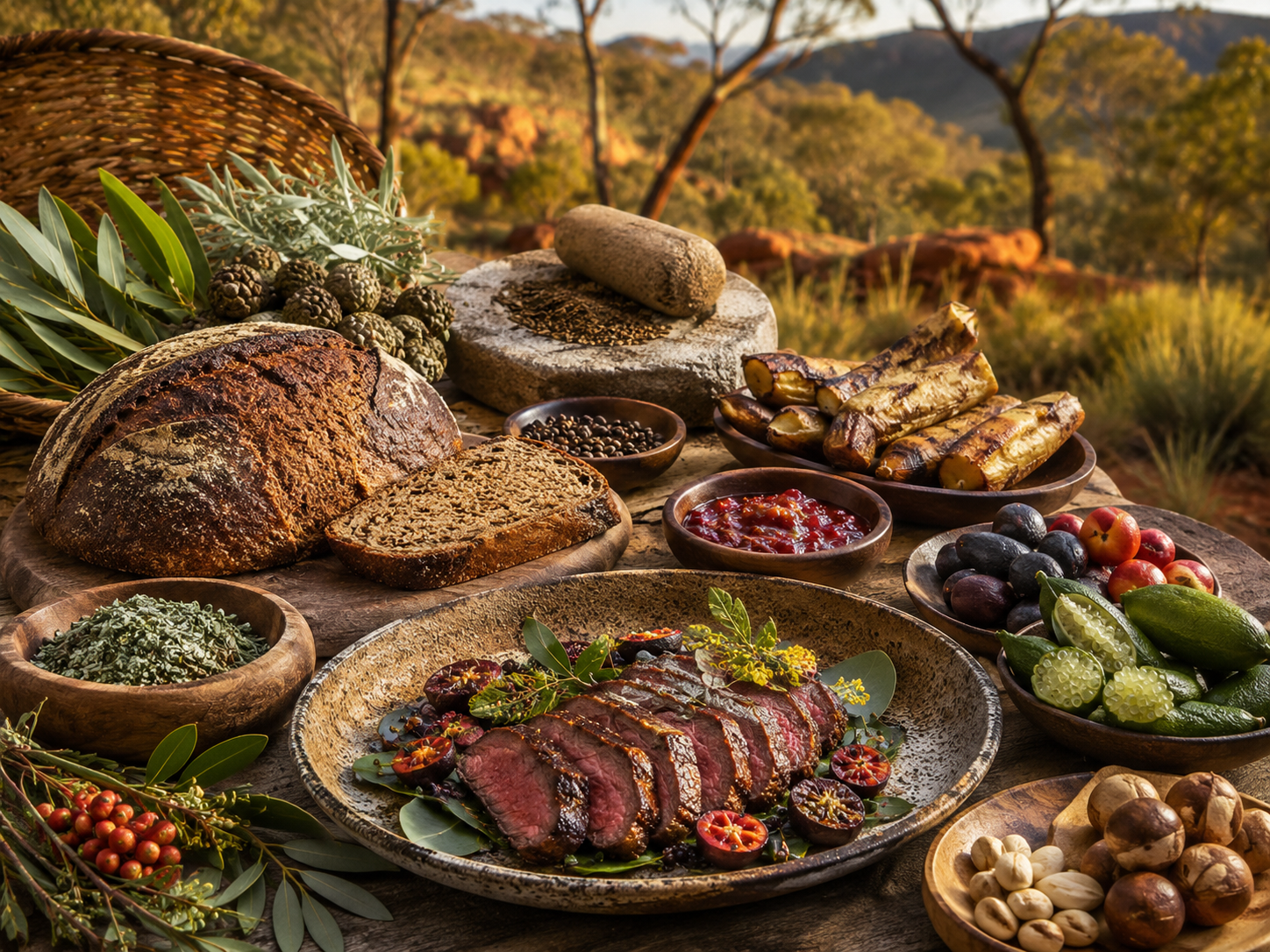
The ancient Australian pantry was rich and diverse. Wattleseed was one of the most useful ingredients because it could be collected, roasted, ground, and turned into flour. This flour was used to make flatbreads or mixed into simple cakes cooked near fire. Its warm, earthy flavour is still valuable today in biscuits, pancakes, breads, and even ice cream. Another important food was murnong, or yam daisy, a small root vegetable that was once widespread across parts of southern Australia. It could be roasted in ashes or cooked slowly until soft and sweet.
Fruits from the bush added colour and nutrition to traditional diets. Quandong offered a tart flavour that worked well fresh or dried. Kakadu plum was highly valued for its strong sour taste and nutritional strength. Finger lime, now admired for its jewel-like citrus beads, brought brightness to meals long before it appeared on restaurant menus. Lemon myrtle, native pepperberry, saltbush, and bush tomato also added fragrance, seasoning, and depth to food.
Ancient cooking in Australia did not rely on complicated equipment. Instead, it used knowledge of fire, stone, water, and earth. Seeds were crushed with grinding stones. Meat and fish were roasted over coals or smoked. Tubers were baked in earth ovens. Nuts such as bunya nuts were cooked, eaten whole, or pounded into pastes. These techniques show that traditional Australian food was not primitive; it was practical, intelligent, and closely adapted to local environments.
Many old-style recipes can inspire modern kitchens. Wattleseed bread can be served with native honey. Roasted kangaroo can be seasoned with pepperberry and saltbush. Quandong can be cooked into jams, sauces, or desserts. Bunya nut paste can be used in savoury dishes, while lemon myrtle can flavour tea, cakes, and marinades. These dishes are not exact copies of ancient meals, but they help people appreciate ingredients that were once central to life on the continent.
However, revival must be handled carefully. These foods carry cultural meaning, and many are connected to specific communities, lands, and stories. Using them respectfully means acknowledging Indigenous knowledge, buying from ethical suppliers, and supporting Aboriginal and Torres Strait Islander producers whenever possible.
The return of native Australian recipes offers more than new tastes. It encourages people to think differently about food, land, and history. By bringing wattleseed, murnong, quandong, bunya nuts, and other native ingredients back into everyday meals, Australia can honour its oldest food heritage while creating a more sustainable and culturally aware food future.