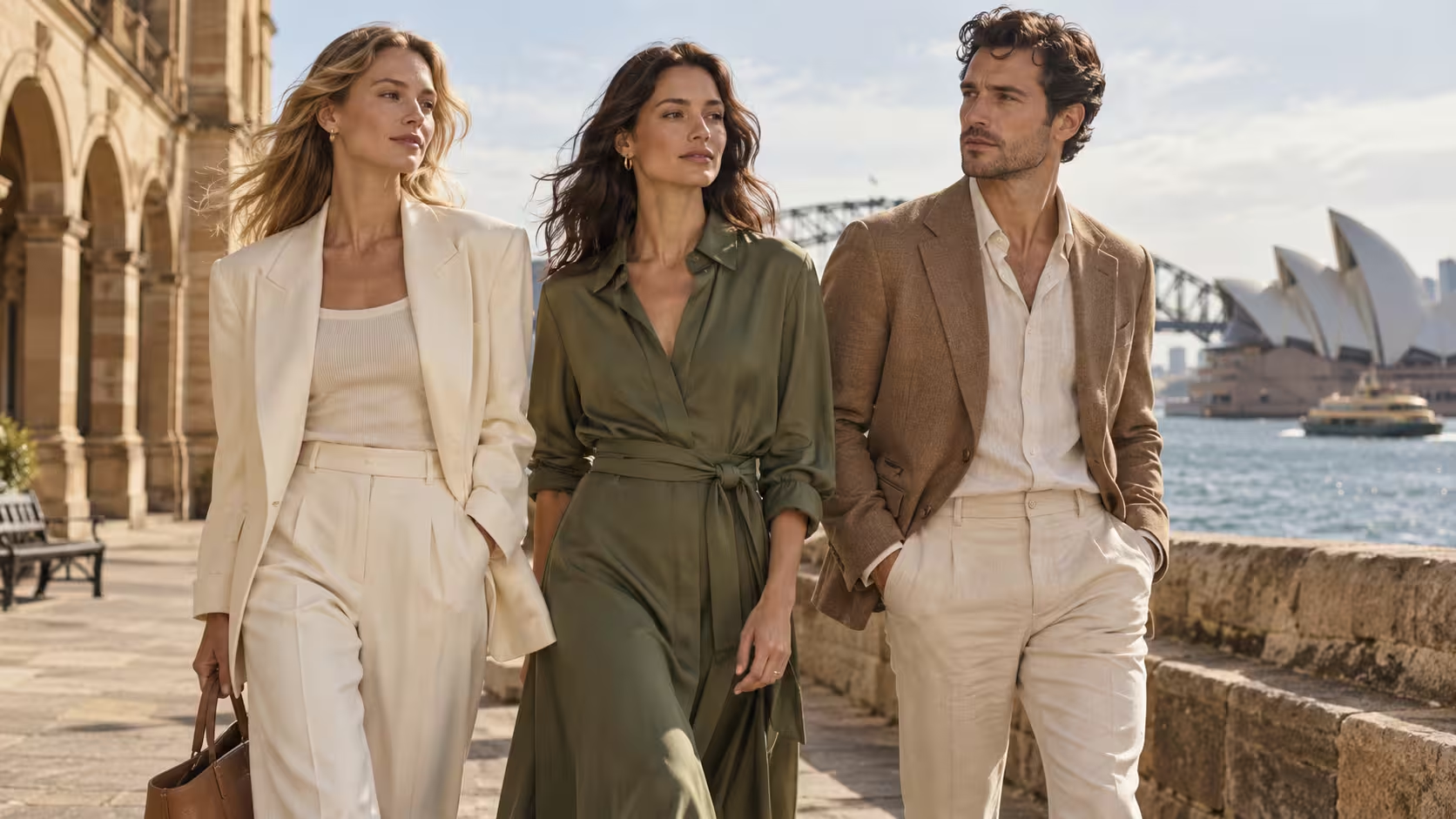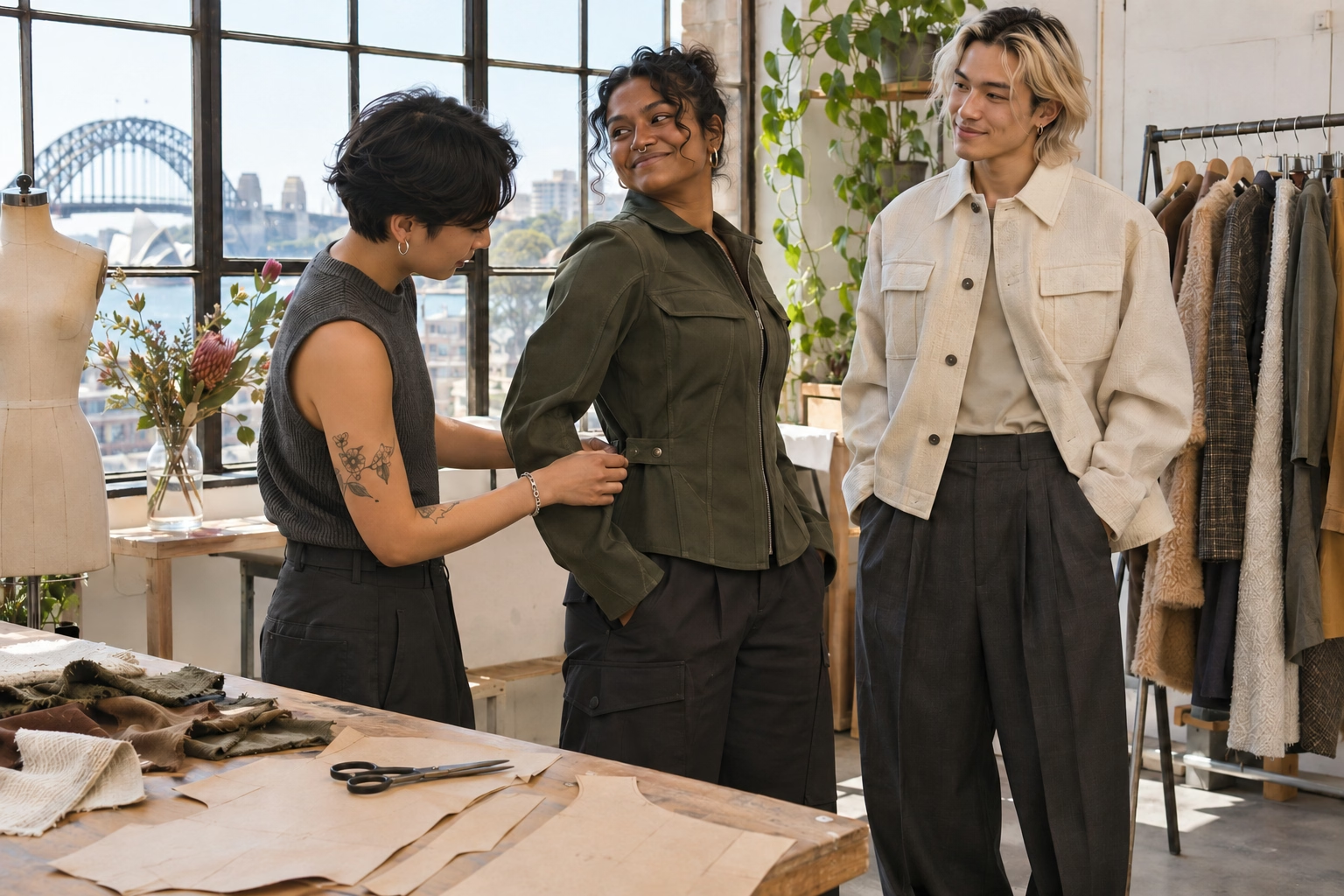
In a fashion system conditioned to produce at volume and discount aggressively, Gary Bigeni has built a practice around the opposite principle. The Sydney-based designer, listed on the Australian Fashion Council’s directory, produces made-to-order fine art collections where original designs are hand-painted directly onto ethically sourced eco-cotton. Production runs are deliberately limited. Every piece is intended to last a lifetime. And critically, every garment is gender-neutral, designed to reflect the distinctive personality of the wearer rather than a prescribed identity category.
A Different Model of Gender-Fluid Design
Bigeni’s approach offers a counterpoint to the assumption that gender-fluid fashion must be trend-driven and youth-oriented. His work sits within the luxury segment, but it rejects the traditional luxury logic of seasonal novelty and exclusivity-through-scarcity. Instead, scarcity is a byproduct of process: hand-painting each garment takes time, and made-to-order production eliminates the waste associated with unsold inventory.
This model aligns with a broader recalibration occurring across Australian fashion. Emerging designers interviewed by Ragtrader in early 2026 described a market where customers are “buying less, but buying better,” seeking quality, originality, and transparency over rapid trend turnover. Justin Tong, founder of his eponymous label, noted that sustainability is moving from a marketing message to a business model—a shift that rewards practices like Bigeni’s, where the constraint on production is built into the design philosophy rather than added as an afterthought.
The Material Argument
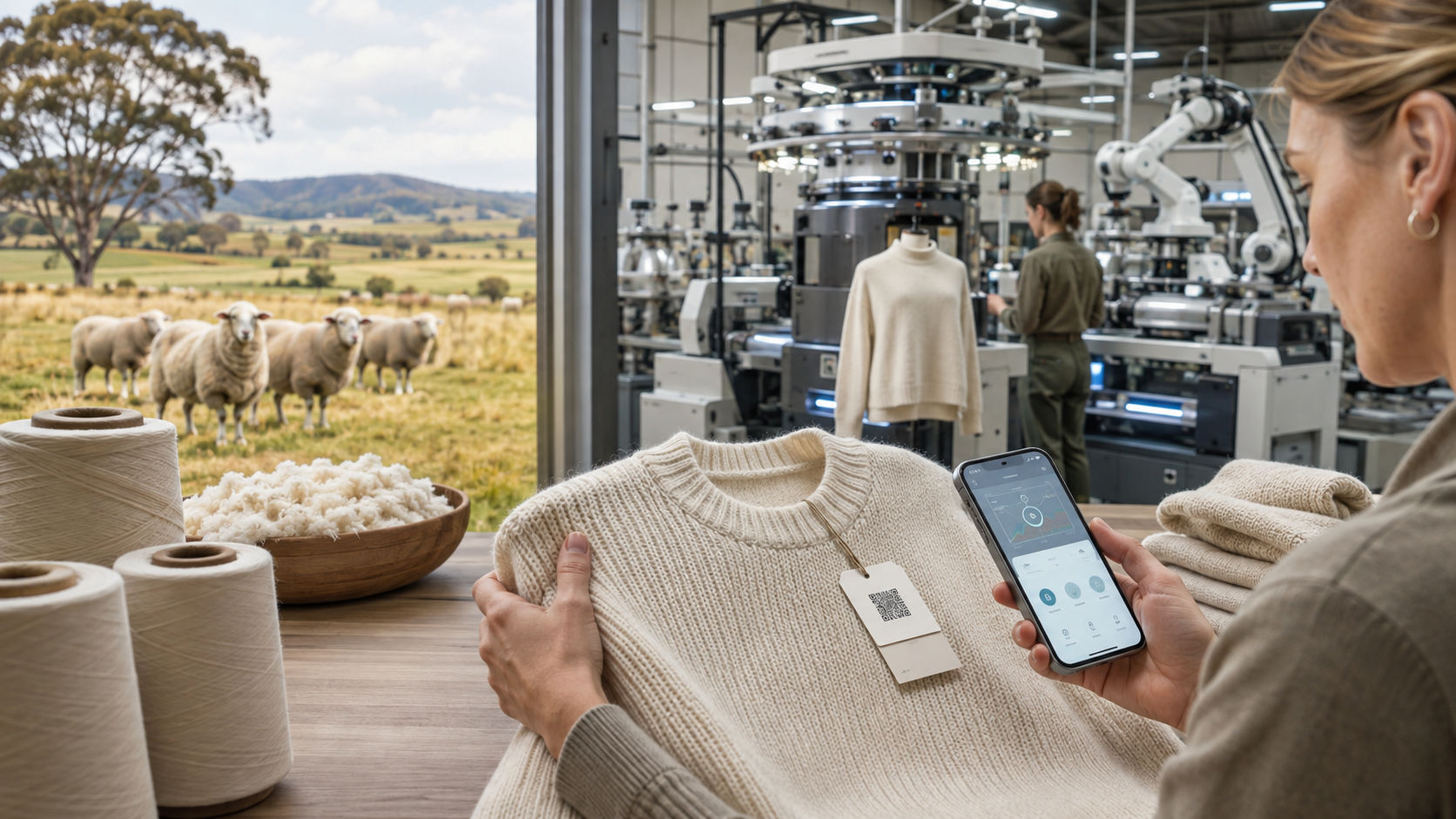
Bigeni’s use of eco-cotton and sustainable manufacturing practices is significant in a local context where material innovation remains uneven. The Australian Fashion Council’s research indicates that the vast majority of clothing sold in the country is imported, meaning that local designers have limited direct control over the environmental footprint of their supply chains. By working at a small scale with traceable materials and hand-applied finishes, Bigeni retains a degree of oversight that is difficult to achieve at volume.
This craft-led positioning also resonates with a consumer segment that is increasingly skeptical of corporate sustainability claims. The 2026 Animal Welfare in Fashion Report from Four Paws, which assessed 332 brands globally, found that only 8 per cent had committed to proactively reducing their use of animal-derived materials overall. While Bigeni’s practice is not explicitly framed around animal welfare, the broader pattern is clear: consumers and评级 bodies are scrutinising material provenance with greater rigor, and brands that can demonstrate direct knowledge of their supply chains are better positioned to withstand that scrutiny.
What Luxury Can Learn from Independence
The commercial viability of Bigeni’s model depends on a customer willing to wait and willing to pay for singularity. That customer exists, but is not infinite. The question for the Australian fashion industry is whether the aesthetic and ethical lessons of practices like Bigeni’s can be translated into a scale that reaches beyond the made-to-order tier.
Some signals suggest they can. The National Designer Award finalists interviewed by Ragtrader consistently emphasised longevity, craftsmanship, and emotional durability as the values that will define the next decade of Australian fashion. Gender-neutral design, in this framing, is not a separate category bolted onto a brand’s offering. It is a natural consequence of designing for a wearer rather than a demographic—a principle that Gary Bigeni has been refining for years, largely without fanfare.