Regenerative Cotton Farming and Digital Traceability
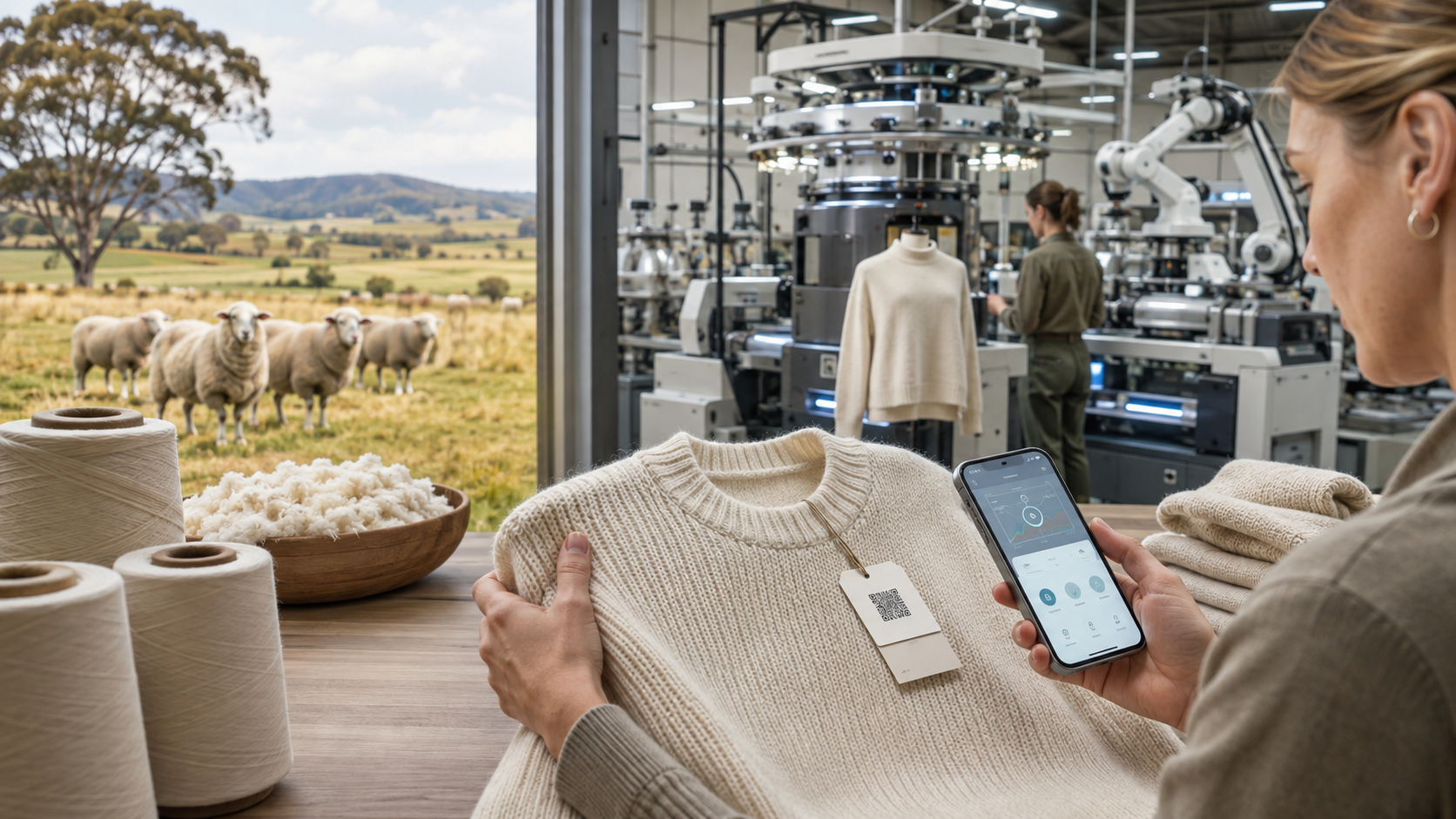
Queensland’s cotton belt is undergoing a quiet agronomic revolution. Growers participating in Cotton Australia’s “Cotton to Market” programme now use satellite imagery and soil‑carbon probes to verify regenerative practices such as cover cropping, reduced tillage and biodiversity corridors. The 2025‑26 season saw the first bales traded with a regenerative premium, fetching 12 per cent above conventional prices. A blockchain‑enabled traceability platform records every step, from gin to spinner, allowing fashion labels to tell a verified sustainability story. This pivot is reshaping the raw‑material base of Australian textiles, making cotton a genuine contender alongside merino wool in the premium sustainable fibre market. Cotton Australia Traceability Initiative
Waterless Dyeing and Digital Pigment Printing
Inside a Port Melbourne pilot plant, a closed‑loop dyeing system uses recycled carbon dioxide instead of water to infuse colour into polyester and cotton blends. The technology eliminates liquid effluent entirely and reduces energy consumption by 50 per cent compared with conventional bath dyeing. Nearby, digital pigment printers are laying down micro‑precise designs on organic cotton poplin without water or chemical fixatives, enabling short runs and on‑demand production. These innovations are critical for a country where water scarcity is a perennial risk; they also strip weeks off the design‑to‑store timeline and cut carbon footprints dramatically.
The Local Milling Ecosystem and Brand Collaborations
The Australian Fashion Council’s 2026 “From High Fashion to High Vis” report revealed that 67 per cent of surveyed brands intend to increase local sourcing within two years. Small‑scale weaving and knitting mills are sprouting in industrial precincts to meet this demand. A case in point is a recent collaboration between a Byron Bay resort‑wear label and a Brisbane circular knit mill that produced a 100 per cent regeneratively grown cotton capsule collection sold out in 72 hours. Such partnerships demonstrate that regenerative agriculture and onshore processing can merge into a commercially viable, low‑waste model that appeals to conscious consumers and investors alike.