The Recession-Proof Fandom
Conventional economic logic suggests that when household budgets tighten, discretionary spending on entertainment should be the first to go. Australia’s fan economy in 2026 is proving that logic wrong. According to Adobe’s consumer research, 73% of Australians said they did not expect to reduce their spending on footy finals this year, with 40% planning to spend over A$150 on celebrations and 27% willing to fork out more than A$1,000 to attend a final in person if their team made it . This is not casual consumption; it is prioritized devotion.
The Live Music Paradox
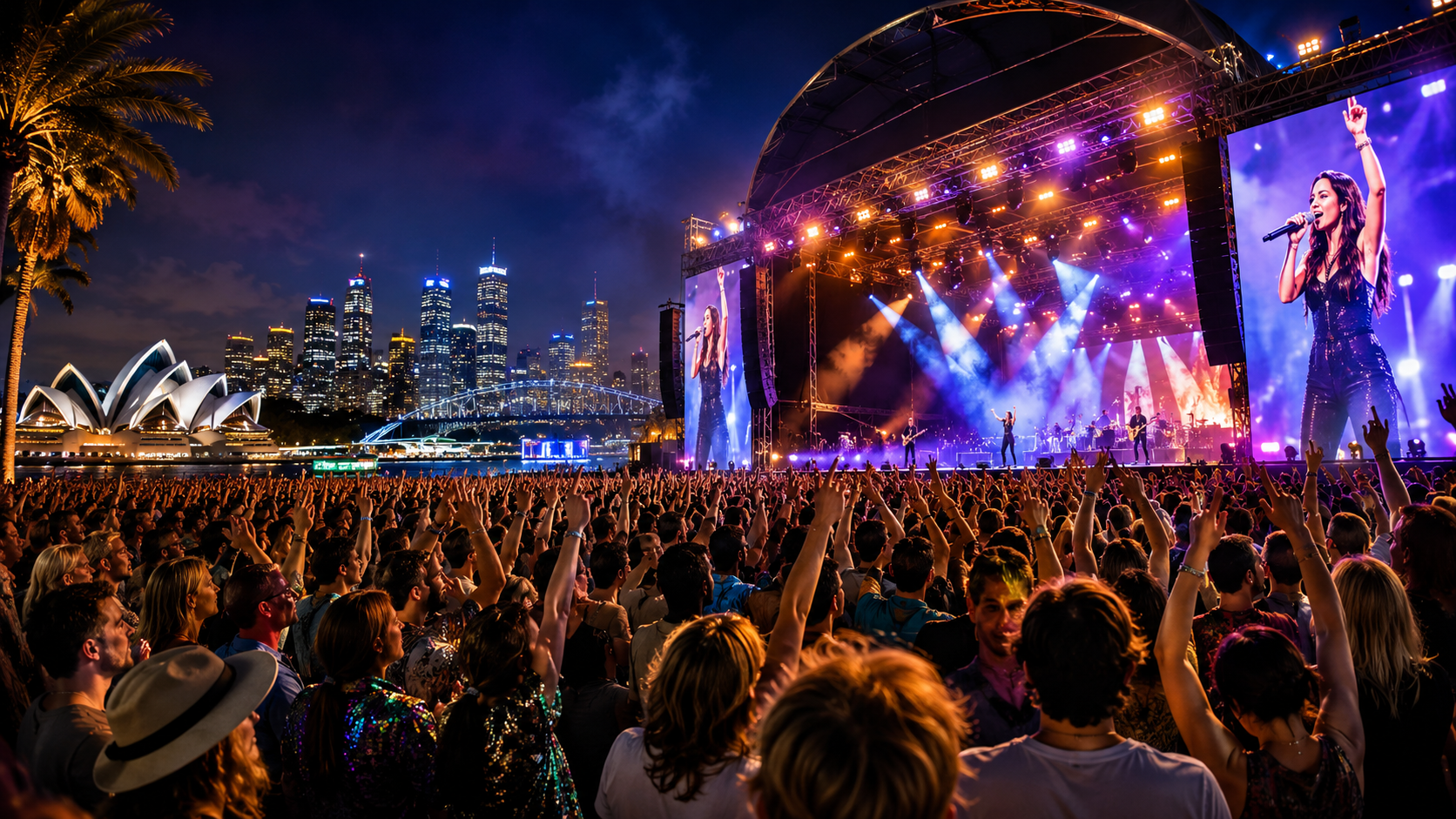
The same pattern holds in music. Live Performance Australia reported that the contemporary music sector generated close to A$1.8 billion in revenue and over 13.7 million attendances in 2025, making it the second-highest year on record . The average ticket price rose 2% to A$138.15, yet fans kept coming. What the data reveals is a form of “experience hoarding”—consumers are cutting back on material goods and redirecting that spend toward moments they perceive as irreplaceable. A concert or a grand final is not a product you can return; it is a memory you either have or you don’t.
Where the Money Actually Goes
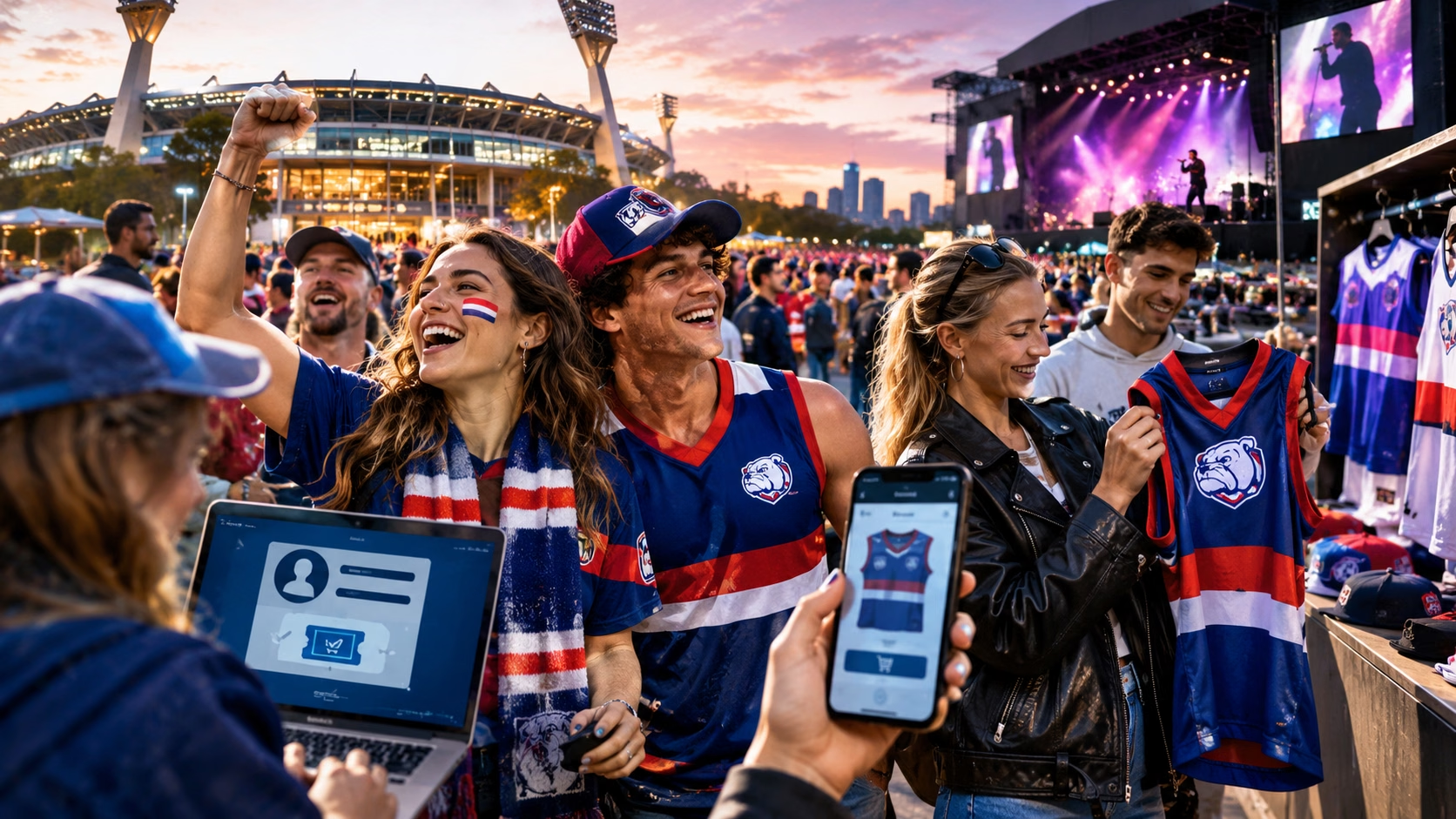
The spending footprint of a modern fan extends well beyond the ticket or the jersey. Adobe’s forecast for the September 2026 football window illustrates the ripple effect: online spending on screens (televisions, projectors, streaming devices) was projected to rise 14%, while food and drink spending was set to climb 9% . Beer sales alone were expected to jump 25% during the NFL’s Melbourne debut weekend . The fan economy, in other words, is not a single transaction but a cluster of them, often triggered by a shared cultural moment. Retailers who understand this are positioning themselves not as sellers of goods, but as enablers of the watch party, the pilgrimage, and the celebration.
The Generational Divide in Spending Logic
Not all fans spend the same way. Younger Australians are far more likely to be influenced by social media and creators when making purchase decisions—50% of under-35s cited social platforms as a purchase driver, compared to a 24% average across all age groups . They are also more likely to spend on digital experiences and apparel that signals affiliation in online spaces. Older fans, by contrast, anchor their spending in tradition: memberships passed down through generations, physical merchandise, and attendance at live events. Both cohorts are spending, but they are buying different versions of the same loyalty.
The Retail Response
Smart retailers and clubs are adapting by making the purchase path frictionless. Buy-now-pay-later penetration has surged among Gen Z shoppers, with Afterpay alone surpassing 3.5 million active Australian users by early 2025 . When a fan’s team wins on Friday night, the window to sell them a commemorative piece is measured in hours, not days. The infrastructure that enables that impulse—fast checkout, integrated social commerce, and member-exclusive early access—is what separates the winners from the also-rans in Australia’s fan economy.