The Shift from Clinic-Centric to Home-Centred Monitoring
Australia’s hospital system is facing a structural squeeze. An ageing population, rising rates of chronic conditions, and workforce constraints are making traditional in-person monitoring increasingly unsustainable. Wearable technology is emerging as a practical answer—not by replacing clinicians, but by extending their reach into patients’ homes with continuous, real-time physiological data.
TeleClinical Care: A Scaled Proof Point
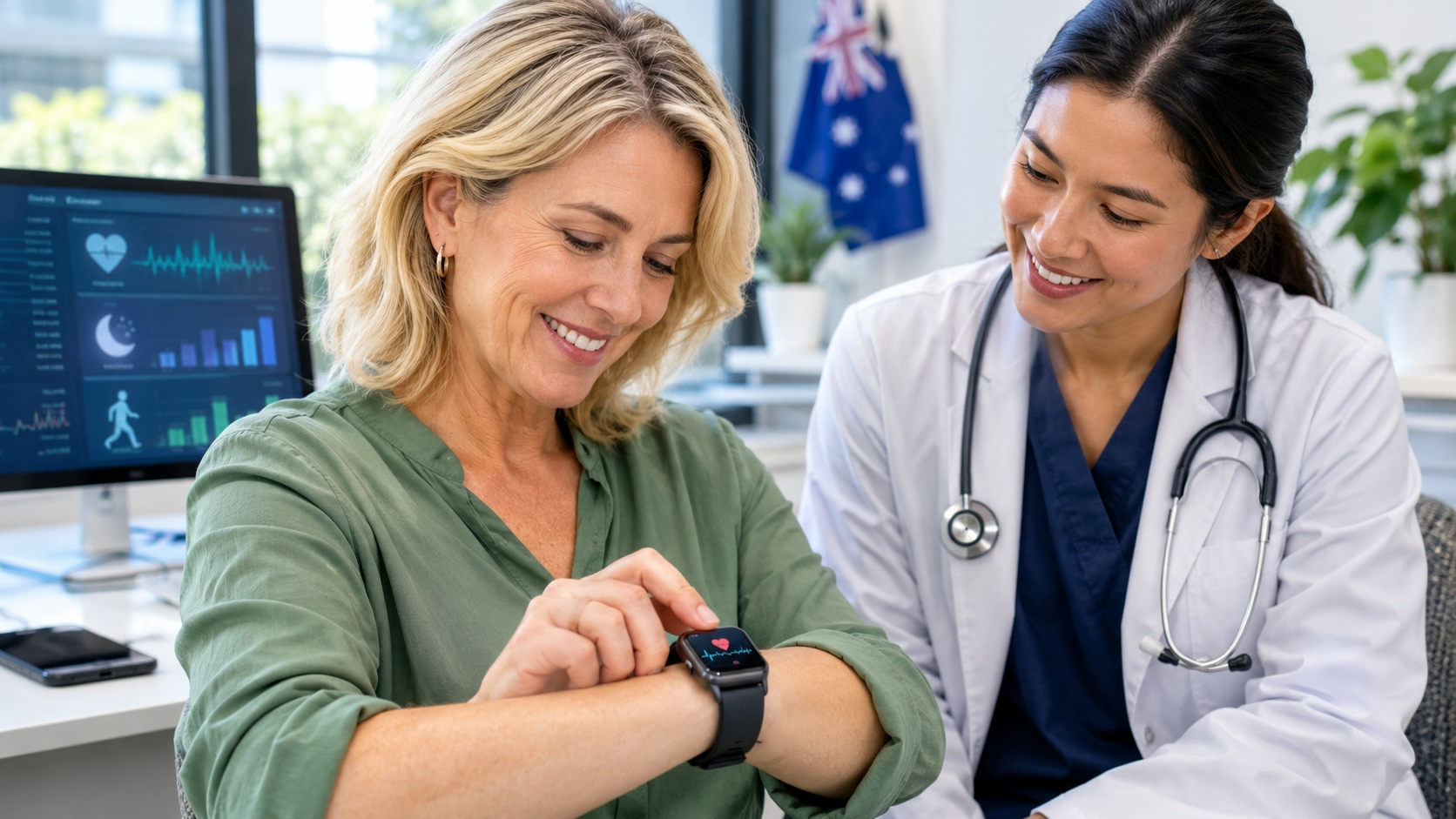
One of the most concrete examples comes from the Sydney Partnership for Health, Education, Research and Enterprise (SPHERE). Its TeleClinical Care (TCC) platform was designed to integrate telehealth with real-time patient monitoring, initially within Hospital in the Home programs for cardiovascular and COVID-19 patients. The results are instructive: more than 8,000 patients have been supported through the remote monitoring system, and over 150 clinicians and medical students have been trained in TCC-enabled monitoring. The platform includes daily symptom questionnaires and real-time alerts, allowing care teams to intervene when a patient’s condition deteriorates.
The TCC model is now being adapted for aged care through TCC-Community, incorporating predictive analytics and enhanced communication for caregivers. The direction of travel is clear: remote monitoring is moving from pilot projects to embedded care pathways.
A Sensor That Listens Like a Stethoscope
At the hardware frontier, engineers at UNSW Sydney have developed a wearable patch that could change how heart and breathing conditions are monitored from home. The AusculPatch—weighing just 3.2 grams and measuring roughly 20×47×3 millimetres—attaches to the chest with medical adhesive tape and captures subtle vibrations from the heart, lungs, and blood flow. Lead researcher Scientia Associate Professor Hoang-Phuong Phan describes the goal bluntly: “Technically, it aims to replace the stethoscope”.
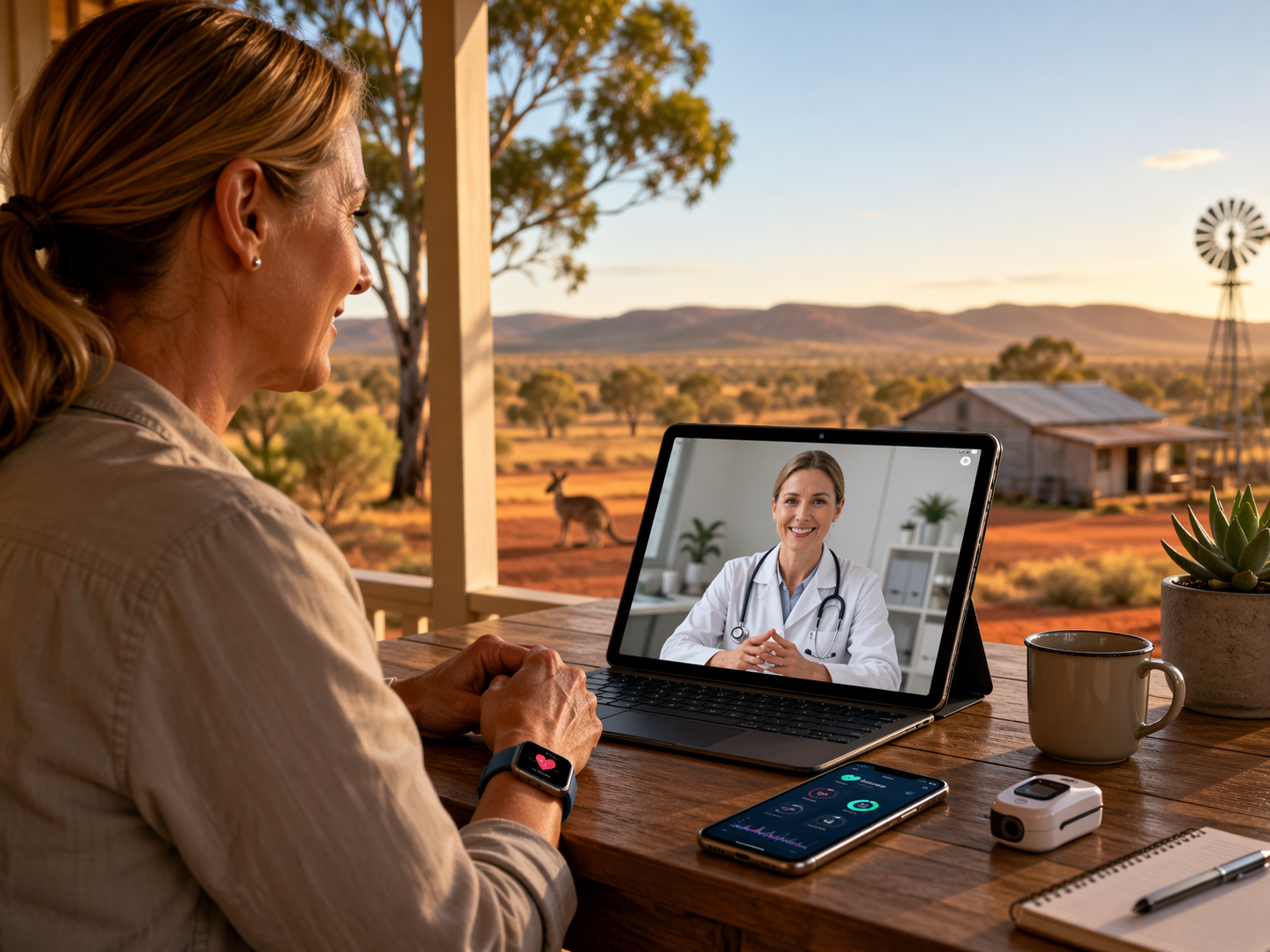
The clinical rationale is compelling. Patients in regional and remote areas often delay seeking care until symptoms are severe, and a standard clinic assessment provides only a brief snapshot. “When they go to a clinic, patients often only have a 15-minute window for assessment,” notes Dr Anthony Sunjaya, a co-author of the research published in Nature Communications. Continuous home monitoring could catch deterioration before it becomes a crisis.
The Remote Monitoring Market Accelerates
The commercial landscape is responding. Australia’s remote patient monitoring device market is projected to grow at a compound annual growth rate of 9–12% from 2026 to 2035, driven by ageing demographics and the shift toward value-based care. Chronic disease management, post-acute care, and hospital-at-home programs are the primary demand drivers.
Real-time monitoring also changes the economics of care. Shorter hospital stays, fewer readmissions, and more efficient use of clinical time are the promised dividends. But the harder work lies in workflow integration—ensuring that a stream of wearable data reaches the right clinician at the right moment, rather than adding another dashboard to an already fragmented system.
The Unfinished Integration Challenge
The SPHERE experience suggests that success depends less on the sensor and more on the surrounding service design: multilingual support (the TCC app is translated into five languages), structured symptom reporting, and clear escalation pathways. As monitoring moves deeper into routine care, the question is no longer whether wearables can generate useful data. It is whether the health system can absorb that data without amplifying alert fatigue or widening disparities for patients with limited digital access.