From Elective to Essential
Five years ago, sustainability in fashion education was a niche elective — a bonus module for environmentally conscious students. Today, it is the backbone of nearly every major fashion program across Australia. The shift reflects a broader reckoning within the industry, where the environmental and social costs of textile production have become impossible to ignore.
In 2026, sustainability is not taught as a standalone subject. It is woven into patternmaking, textile science, business strategy, and design thinking from day one. Australian fashion schools have recognised that producing designers who do not understand circular economy principles is producing designers who are not ready for the industry that exists today.
RMIT’s Circular Economy Focus
RMIT University has positioned sustainability at the heart of its Associate Degree in Fashion, explicitly spotlighting the circular economy and sustainability as key considerations for today’s fashion industry. The curriculum explores the fashion industry’s environmental and social impact alongside sustainability innovations, equipping students to contribute to a more responsible and conscious fashion future.
The university’s Bachelor of Fashion Sustainability goes further, providing students with practical, theoretical, and technical skills to create sustainable fashion and textile solutions across diverse roles in the sector. This is not abstract theory — it is hands-on training in the technologies and methodologies that will define the next decade of fashion production.
UTS and the Business Case for Sustainability
The University of Technology Sydney offers a Diploma in Fashion and Sustainability designed to introduce students to the research, design, and development of fashions as a force for positive change in society. The program acknowledges what the industry has long understood: sustainability is not just an ethical imperative, but a commercial one.
UTS’s approach integrates sustainability with technical competencies, teaching patternmaking and garment construction alongside a broad understanding of the fashion industry’s environmental footprint. Students graduate with the ability to design beautiful garments and the knowledge to ensure those garments are produced responsibly.
Collarts and the Zero-Waste Design Movement
Collarts in Melbourne has developed one of the most focused sustainability curricula in the country. Its Bachelor of Design (Fashion & Sustainability) is led by industry experts who are at the forefront of sustainable fashion design, reinvention, forecasting, and enterprise.
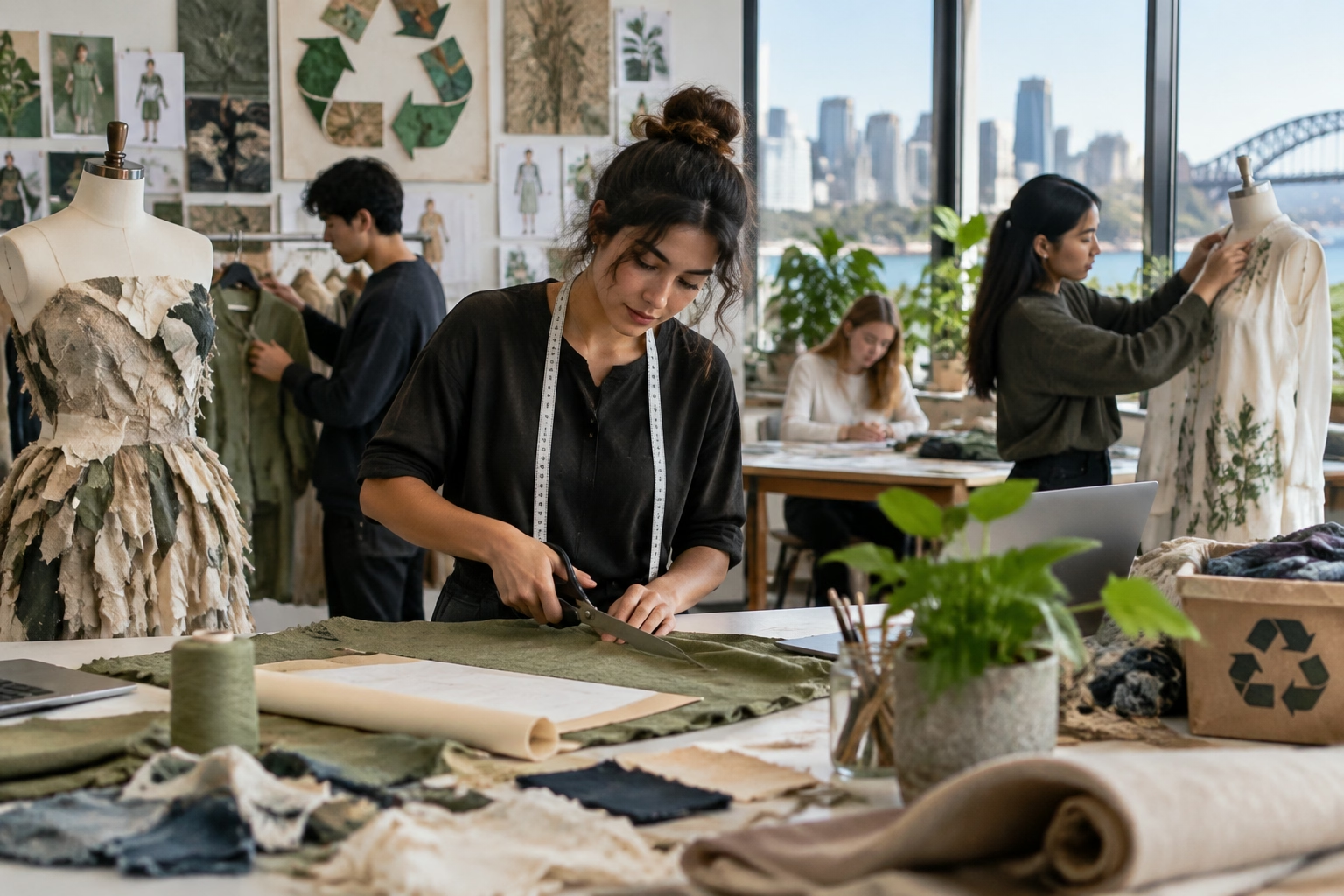
The program teaches students to create, develop, and produce ethical fashion products and services, with specific training in zero-waste techniques and technologies. Students gain hands-on experience with upcycling projects, including transforming t-shirts into new garments for major events like Melbourne Fashion Week.
The Industry Backdrop: A Sector in Transition
The urgency of this educational shift becomes clear when examining the broader industry landscape. According to the National Manufacturing Strategy for Australian Fashion and Textiles 2026-2036, 97 per cent of Australia’s clothing and textile products are manufactured offshore, leaving the sector vulnerable to global supply disruptions and trade volatility.
The strategy explicitly prioritises accelerating advanced manufacturing and enabling innovation in circular manufacturing and fibre-to-fibre recycling. Fashion schools are directly responding to this mandate by producing graduates who understand not just how to design, but how to design within planetary boundaries.
A Generation of Designers Who Think Differently
The students graduating from Australian fashion schools in 2026 will enter an industry that is fundamentally different from the one their predecessors joined. They will be expected to know the carbon footprint of the fabrics they choose, to design for longevity rather than disposability, and to build business models that prioritise transparency over volume.
The integration of sustainability into the core curriculum is not a trend. It is a fundamental recalibration of what it means to be a fashion designer in the twenty-first century. Australian fashion schools are not waiting for the industry to change — they are training the people who will change it.