A Report That Demands National Attention
The release of the Aboriginal and Torres Strait Islander Stolen Generations survivors and descendants report has laid bare the profound and ongoing health consequences of Australia’s forced removal policies. Commissioned by the Healing Foundation and released in September 2026, the report reveals that Stolen Generations survivors—now an ageing population, all over the age of 50 and about one third over 65—experience significantly poorer health outcomes than both other Indigenous Australians and the broader non-Indigenous population.
The statistics are staggering. Survivors are almost three times as likely to have a severe or profound disability, twice as likely to have been admitted to hospital in the past year, twice as likely to report high psychological distress, and almost twice as likely to have been diagnosed with a mental or behavioural condition. Compared with non-Indigenous Australians, the disparity is even more acute: survivors are six times as likely to have kidney disease, five times as likely to have a severe or profound disability, four times as likely to report high psychological distress, and three times as likely to have poor or fair self-assessed health.
The Intergenerational Ripple Effect
The health crisis extends far beyond the survivors themselves. About half of all Indigenous Australians aged 18 and over are descended from Stolen Generations survivors. These descendants are more likely to report high psychological distress, more likely to have had days without money for basic living expenses, and more likely to have been diagnosed with a mental health condition compared with other Indigenous Australians. Compared with non-Indigenous Australians, descendants are almost three times as likely to have a severe or profound disability, 2.5 times as likely to report high psychological distress, and twice as likely to be unemployed.
The data reveals what Healing Foundation Board chair Professor Steve Larkin described as “very clear intergenerational effects” and the enduring impact of forced removal policies. This is not a historical footnote but a living, breathing public health emergency.
Why This Is a Contemporary Policy Issue
Professor Larkin was unequivocal in his assessment: “This is a contemporary policy issue, not a historical one — survivors are still with us, they are ageing and require urgent access to culturally safe support in aged care, social services, health and wellbeing”. The ageing of the survivor population presents unique challenges. As they grow older, their health needs become more complex, requiring coordinated care across multiple sectors. Australian Institute of Health and Welfare spokesperson Martin Edvardsson noted that understanding survivors’ needs will become increasingly challenging as the population grows older.
The 2026-27 Federal Budget included $3.2 million over four years to exempt Stolen Generations Redress Scheme payments from inclusion in residential aged care asset testing. While this measure provides some financial relief, it is a modest response to a crisis of enormous scale. The Healing Foundation has consistently called for comprehensive, trauma-informed, culturally safe services that address the full spectrum of survivor and descendant needs.
The Need for Culturally Safe, Trauma-Informed Care
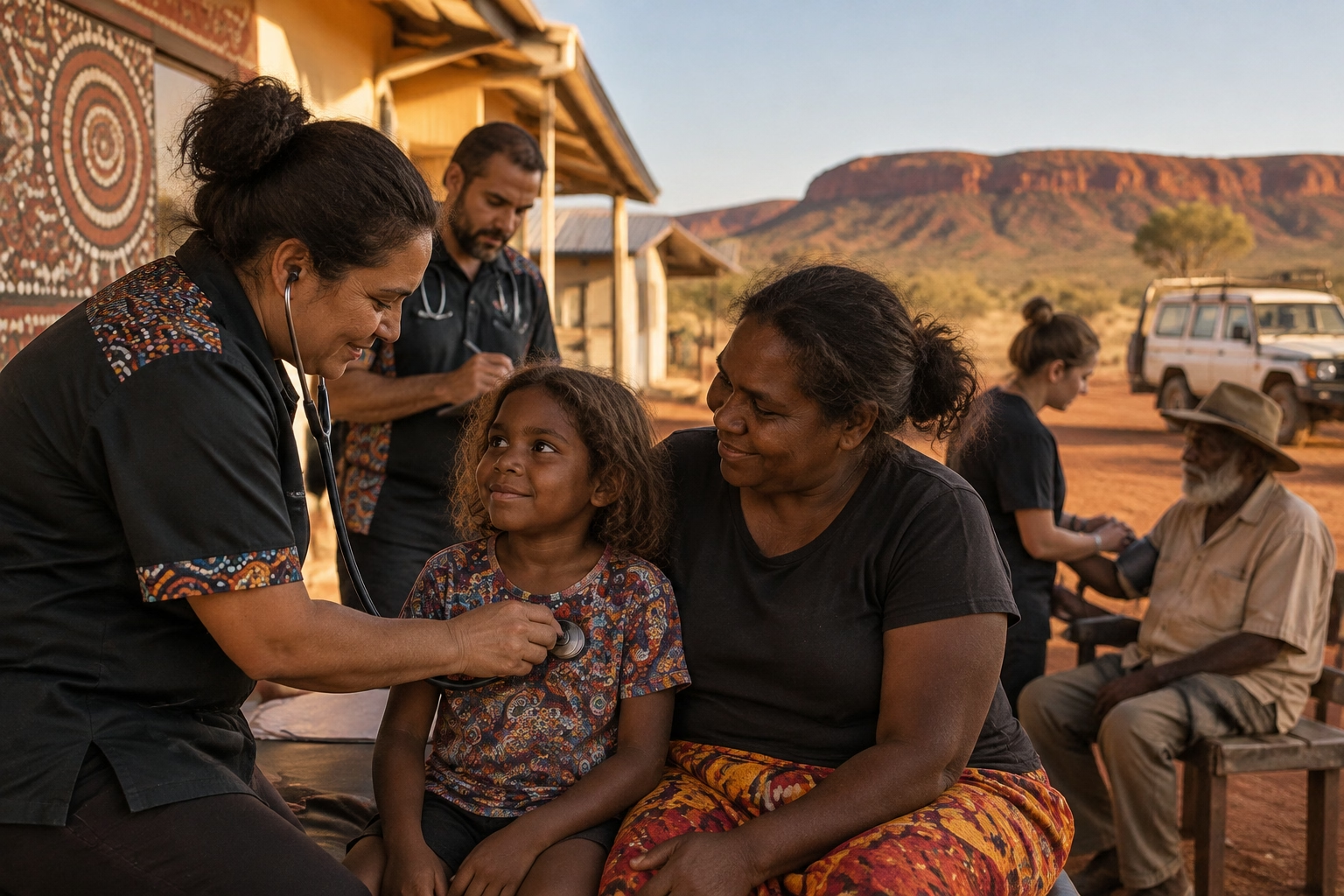
Addressing this crisis requires a fundamental shift in how health and aged care services are designed and delivered. Mainstream services must become trauma-informed and culturally safe, recognising that many survivors carry deep mistrust of institutions rooted in their removal experiences. Aboriginal Community Controlled Health Organisations are uniquely positioned to deliver this care, as they are designed and governed by the communities they serve.
The report serves as a stark reminder that the policies of the past continue to shape the health landscape of the present. Until Australia reckons with this legacy through sustained, adequately funded, community-led solutions, the health gap will persist across generations.